
 English
 Turkce
 Deutsch
 Francais
 Russkij
 العربية
 Espanol
 Italiano
 Nederlands
 Balgarski
 Romana
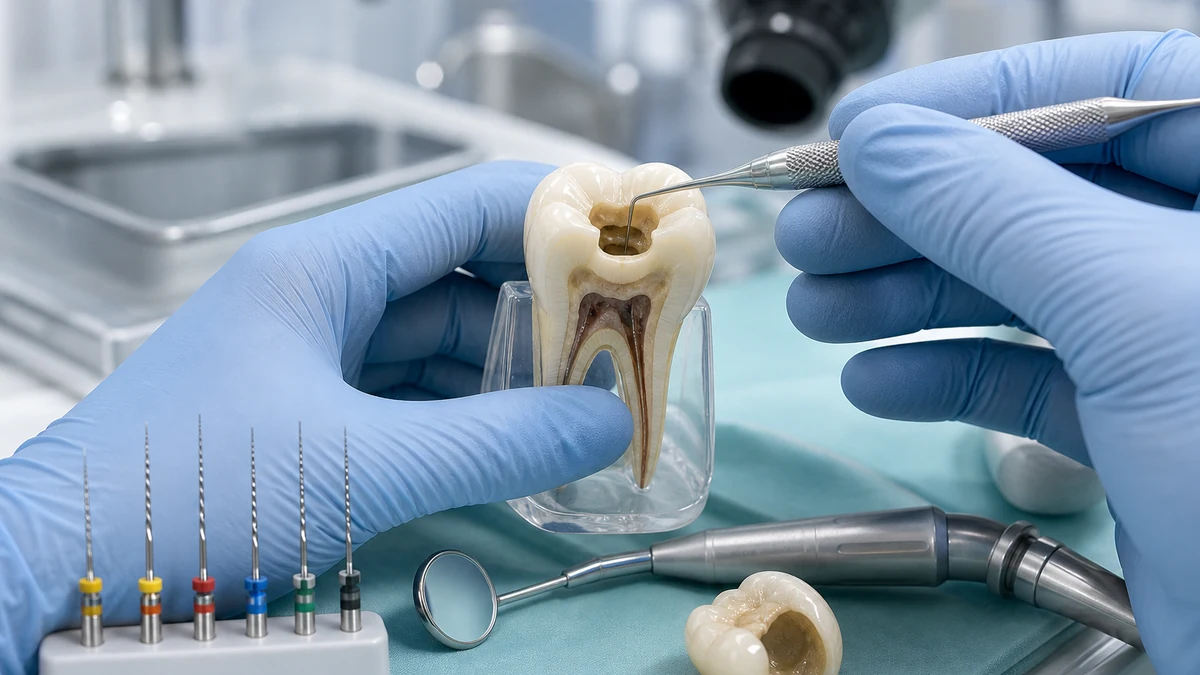
Root canal retreatment is a second root canal procedure carried out on a tooth that has already been treated but has not healed or has developed a new infection. A root canal removes infected tissue from inside a tooth and seals it, yet a small percentage of treated teeth fail months or even years later. When that happens, root canal retreatment is often the first option to save the tooth before considering surgery or extraction. This is a common, well-established part of endodontic care, and the same approach applies whether you are treated at home or as part of dental treatment in Turkey.
This guide explains why a root canal can fail, how to recognise the warning signs, what retreatment actually involves, and the realistic alternatives if a tooth cannot be retreated. The aim is to help you understand your options and act early, because a tooth caught in time is far easier to save.
Why does a root canal fail?
A root canal can fail when bacteria remain in, or re-enter, the inner canals of the tooth. Most original treatments succeed for many years, but no procedure has a perfect outcome, and several factors can disrupt the seal that keeps a tooth healthy long term.
Common reasons a previously treated tooth becomes infected again include:
- Narrow, curved, or extra canals that were difficult to find and clean fully during the first treatment.
- A delay in placing the permanent filling or crown, allowing saliva and bacteria to leak back in.
- A new cavity, crack, or fracture that exposes the inside of the tooth to fresh infection.
- Breakdown of the original filling material over time.
- Restorations that no longer seal the tooth properly at the margins.
Because the tooth has already lost some structure, protecting it well after treatment matters. Many root-treated teeth are later capped, and it can help to understand how a crown rebuilds and protects a treated tooth so the result lasts.
What are the signs a root canal has failed?
The clearest signs of a failed root canal are returning pain, swelling, or tenderness around a tooth that was previously treated. Some failures cause obvious symptoms, while others are silent and only show up on a routine X-ray, which is one reason regular check-ups matter.
Symptoms worth reporting to a dentist include:
- Pain when biting or applying pressure to the tooth.
- Lingering sensitivity, or a dull ache that comes and goes.
- Swelling or tenderness in the gum near the tooth.
- A small pimple-like bump on the gum that may release fluid.
- A bad taste, or discolouration of the tooth.
Some of these are also early signs of a spreading infection. If you notice a gum bump or facial swelling, read about the causes and warning signs of a dental abscess and seek prompt advice, as an abscess can need urgent care.
What does root canal retreatment involve?
Retreatment follows the same principle as the first procedure, with one extra stage: the existing filling material is removed before the canals are cleaned again. It is usually carried out under local anaesthetic, often by a specialist endodontist, and may take one or two appointments depending on the tooth.
- Assessment. The dentist reviews your history and takes X-rays, sometimes a 3D scan, to find the cause of the problem and map the canals.
- Reopening the tooth. Any crown, post, or filling covering the tooth is carefully removed to reach the canal system.
- Removing old material. The previous root filling is taken out so the canals can be fully cleaned again.
- Cleaning and disinfecting. The canals are reshaped, disinfected, and checked for any missed or extra canals.
- Refilling and sealing. The cleaned canals are filled and sealed to prevent bacteria returning.
- Restoring the tooth. A new permanent filling and usually a crown are placed to protect the tooth and restore its function.
The tooth may feel tender for a few days afterwards, which normally settles with simple pain relief. Your dentist will explain what to expect and when to follow up.
Is root canal retreatment painful?
Retreatment should not be painful during the procedure, because local anaesthetic numbs the tooth and surrounding gum first. Most people feel only pressure. Mild tenderness or sensitivity for a few days afterwards is common and usually eases with over-the-counter pain relief and gentle care.
If significant pain, swelling, or a high bite persists beyond a few days, contact your dentist so the tooth can be reviewed. Lingering symptoms are not a normal part of healing and may mean the tooth needs further assessment.
What are the alternatives if retreatment is not possible?
If a tooth cannot be retreated, or retreatment has already been tried without success, there are still ways to deal with the underlying infection. The right choice depends on how much healthy tooth structure remains and the position of the root.
- Apicoectomy. A minor surgical procedure that removes the infected tip of the root and seals it from the end, used when retreatment through the crown is not feasible.
- Extraction. Removing the tooth when it cannot be saved, followed by a replacement such as a dental implant or bridge to restore the gap.
- Monitoring. In selected cases with no symptoms, a dentist may choose to review the tooth over time before deciding.
Where surgery may be the better route, our guide to an apicoectomy and how it saves a tooth after a root canal explains how the procedure works and when it is recommended.
How successful is root canal retreatment?
Root canal retreatment has high long-term success rates and saves many teeth that would otherwise be lost, though no treatment can guarantee a perfect outcome. Success depends on the cause of the original failure, the anatomy of the tooth, and how well it is restored and cared for afterwards. A well-sealed, crowned tooth can serve for many years.
How much does root canal retreatment cost?
The cost of root canal retreatment varies with the tooth involved, the number of canals, and whether a new crown is needed, as well as the country where it is carried out. Retreatment generally costs more than a first root canal because of the extra work involved. In the UK, specialist retreatment commonly runs into several hundred pounds per tooth, while treatment in Turkey is typically a fraction of that. These figures are approximate and vary by case, so always confirm a tailored quote after an assessment.
Related reading

Mehmet Kaplan
Dr. Mehmet Kaplan graduated from Istanbul University Faculty of Dentistry. Applying modern dental techniques and up-to-date treatment methods, Dr. Kaplan personalizes his treatments according to the individual needs of h…
View full profile →