
 English
  Turkce
  Deutsch
  Francais
  Russkij
  العربية
  Espanol
  Italiano
  Nederlands
  Balgarski
  Romana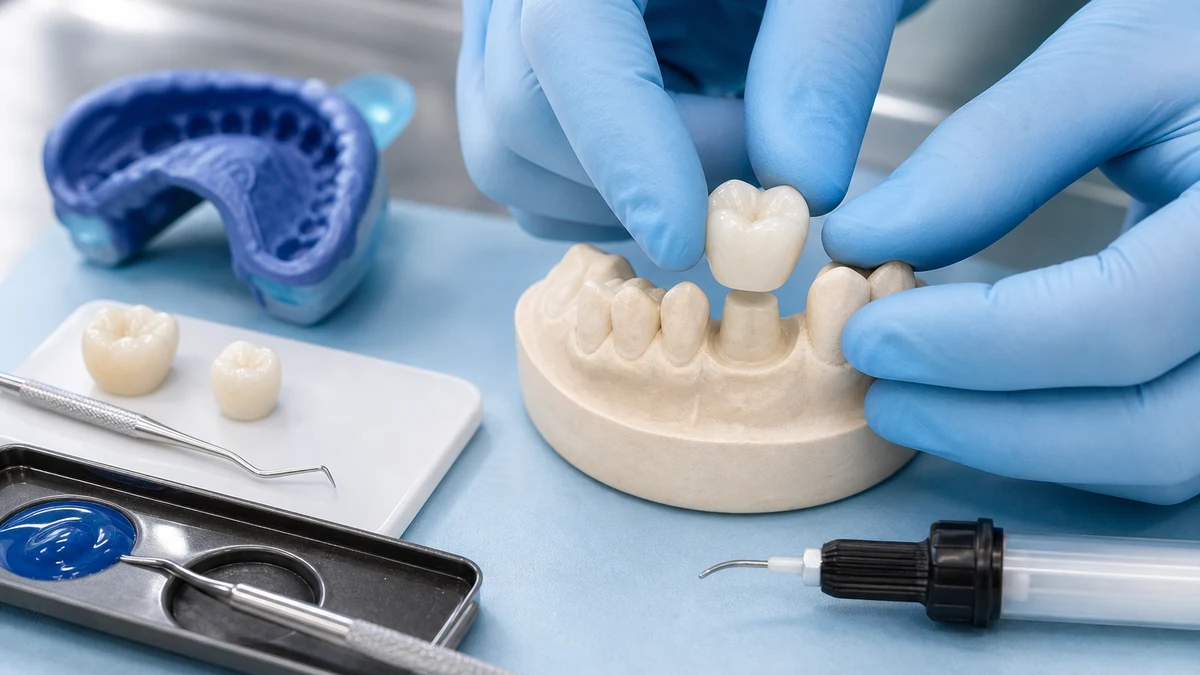
A dental crown is a custom-made cap that covers a damaged, weakened, or heavily restored tooth, restoring its shape, strength, and appearance. The dental crown procedure is one of the most common restorative treatments in dentistry, and understanding it step by step helps you know exactly what to expect. Whether you are having a crown placed at home or as part of dental treatment in Turkey, the core stages are broadly the same: assessment, preparation, impressions, a temporary crown, and the final fitting of your permanent crown.
This guide walks through each stage so there are no surprises in the chair. We will cover why a tooth might need a crown, the materials used, the procedure itself, and the aftercare that helps a crown last for many years.
Why would a tooth need a crown?
A tooth typically needs a crown when too much of its natural structure has been lost for a simple filling to hold reliably. A crown rebuilds the tooth and protects what remains underneath, spreading the bite force so the tooth is less likely to crack or fail.
Common reasons a dentist recommends a crown include:
- A large cavity or old filling that has left the tooth too weak to restore with another filling.
- A cracked, chipped, or worn tooth that needs protection from further damage.
- A tooth that has had root canal treatment, which can become brittle over time.
- Restoring a dental implant or anchoring a bridge.
- Improving the shape or colour of a discoloured or misshapen tooth.
If you are weighing up the difference between protecting a tooth now and rebuilding gradually, it can help to read about what to expect from temporary and permanent crowns before treatment begins.
What materials are dental crowns made from?
Crowns can be made from several materials, and the right choice depends on the tooth's position, how visible it is, and how much biting force it must withstand. Front teeth usually prioritise appearance, while back teeth prioritise strength. Your dentist will recommend an option based on your case.
| Material | Best suited to | Key features |
|---|---|---|
| All-ceramic / zirconia | Front and back teeth | Natural look, metal-free, very strong (zirconia) |
| Porcelain-fused-to-metal | Back teeth, bridges | Strong core with a tooth-coloured surface |
| Metal (gold alloys) | Back molars | Highly durable, gentle on opposing teeth, less natural in appearance |
Material choice also influences how long a crown lasts. To understand the realistic lifespan of each type, see our overview of how long dental crowns last and what affects them.
How is a dental crown fitted, step by step?
A traditional crown is fitted over two appointments, usually a week or two apart. The first appointment prepares the tooth and takes the impression; the second fits the finished crown. The steps below show what happens at each stage.
- Examination and planning. The dentist checks the tooth, often with an X-ray, to confirm a crown is the right option and that the root and surrounding bone are healthy.
- Numbing the area. A local anaesthetic is used so the tooth and gum are numb throughout the preparation.
- Preparing the tooth. The dentist removes any decay and reshapes the tooth, trimming a small amount of the outer surface so the crown will fit over it. If a lot of structure is missing, a core filling may be built up first.
- Taking the impression. A precise mould or digital scan of the prepared tooth is taken, along with the opposing teeth, so the crown fits your bite accurately.
- Fitting a temporary crown. A temporary crown protects the prepared tooth while the permanent one is made in a dental laboratory.
- Fitting the permanent crown. At the second visit, the temporary crown is removed and the permanent crown is checked for fit, bite, and colour, then bonded into place with dental cement.
Some clinics offer same-day crowns using in-house milling technology, which can complete the process in a single visit. The clinical principles remain the same; only the laboratory step is shortened.
Is the dental crown procedure painful?
The procedure itself should not be painful, because the tooth and gum are numbed with local anaesthetic before any preparation begins. Most people feel only pressure or vibration. Mild sensitivity to hot and cold for a few days afterwards is common and usually settles on its own.
If discomfort lingers beyond a week or two, if the bite feels high, or if the crown feels loose, contact your dentist so it can be checked and adjusted. Persistent pain is not a normal part of healing and is worth reviewing promptly.
How do you care for a tooth with a crown?
A crowned tooth needs the same daily care as a natural one, because the edge where the crown meets the gum can still collect plaque and the tooth underneath can still decay. Good habits are what help a crown last well over time.
- Brush twice a day and clean between your teeth daily, paying attention to the gum line around the crown.
- Avoid biting very hard objects such as ice, pens, or nut shells, which can chip or fracture a crown.
- If you grind your teeth at night, ask about a night guard to protect the crown and your other teeth.
- Keep up regular check-ups so the crown, the gum, and the tooth beneath can be monitored.
A crown is one of several ways to rebuild a compromised tooth. If you are still comparing options for a larger gap or a missing tooth, our guide to dental bridges and when they are needed sets out how fixed restorations differ.
What happens after the crown is fitted?
Once the permanent crown is cemented, you can usually eat and drink as normal within an hour or two, once the anaesthetic wears off. A short adjustment period is normal as your tongue and bite get used to the new shape. With good oral hygiene and routine reviews, a well-made crown can last 15 years or more, and often longer.
How much does a dental crown cost?
The cost of a dental crown varies with the material, the complexity of the case, and the country where it is placed. In the UK, a single private crown commonly falls in the region of approximately £500 to £1,000, while crowns in Turkey are typically a fraction of that. These figures are approximate and vary by case, so always confirm a tailored quote with your dentist after an assessment.
Related reading

Mehmet Şimşek
Dentist Mehmet Şimşek graduated from Istanbul University Faculty of Dentistry. He applies treatment methods aimed at creating natural and healthy smiles. He continues his work in implantology, prosthetic dental treatment…
View full profile →