
 English
 Turkce
 Deutsch
 Francais
 Russkij
 العربية
 Espanol
 Italiano
 Nederlands
 Balgarski
 Romana
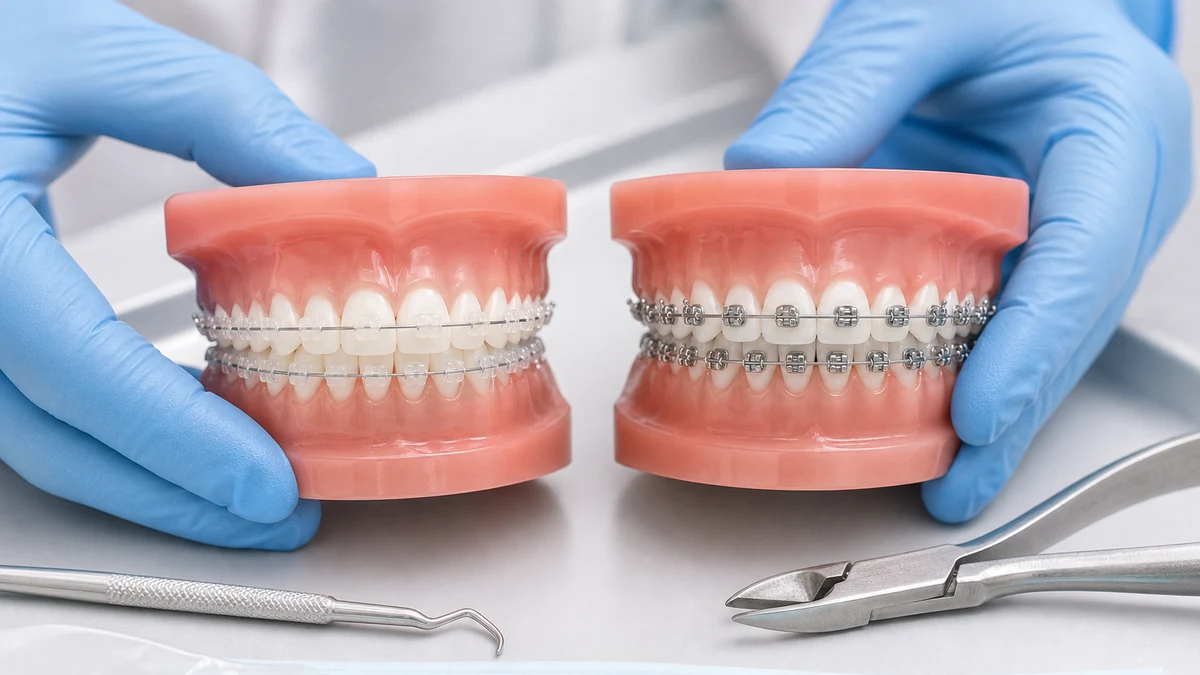
When you choose fixed braces to straighten your teeth, one of the first decisions is the material of the brackets: ceramic vs metal braces. Both are types of traditional braces in Turkey and worldwide, using brackets bonded to each tooth and a connecting archwire to move teeth into position over time. The difference is mainly cosmetic and practical rather than a difference in what the treatment can achieve. Metal braces are made of stainless steel and are the most visible but most robust option. Ceramic (clear or tooth-coloured) braces use brackets that blend with your enamel, so they are far less noticeable. This guide compares ceramic vs metal braces across looks, strength, cost, comfort and treatment time, so you can discuss the right choice with your orthodontic specialist.
Ceramic vs metal braces: side-by-side comparison
The table below summarises the main practical differences. Your bite, the complexity of your case and your daily habits all influence which option suits you best, so treat this as a starting point for a conversation with your dentist rather than a fixed verdict.
| Factor | Metal braces | Ceramic braces |
|---|---|---|
| Bracket material | Stainless steel | Tooth-coloured ceramic |
| Visibility | Clearly visible | Discreet, blends with enamel |
| Durability | Very strong, rarely breaks | Strong but more brittle |
| Staining risk | Brackets do not stain | Clear ties can pick up stains |
| Typical cost | Generally lower | Generally higher |
| Comfort | Slightly bulkier feel | Smooth, often gentler on cheeks |
| Treatment time | Efficient on complex cases | Similar, sometimes marginally longer |
| Best suited to | Complex moves, value, teens | Adults wanting subtlety |
What are metal braces?
Metal braces are the classic, time-tested option. They use small stainless-steel brackets bonded to the front of each tooth, linked by a thin metal archwire that the orthodontist adjusts to guide teeth into alignment. Tiny elastic bands, which can be clear or colourful, usually hold the wire in place.
Because the brackets are metal, they are extremely durable and cope well with the steady forces needed to correct even significant crowding, gaps or bite problems. They are also the most affordable fixed option. Their main drawback is that they are clearly visible, which is why some adults look for a more discreet alternative.
What are ceramic braces?
Ceramic braces work in exactly the same way as metal ones, but the brackets are made from a tooth-coloured or clear ceramic material that blends in with your natural enamel. From a short distance, they are far less noticeable, which makes them popular with adults and older teenagers who feel self-conscious about a metallic smile.
The trade-off is that ceramic is a harder, more brittle material than steel, so brackets can chip or break if treated roughly. The clear elastic ties that hold the wire can also pick up stains from coffee, tea, red wine and smoking, although the brackets themselves resist staining. Good oral hygiene keeps them looking their best.
Are ceramic braces less noticeable than metal braces?
Yes. Ceramic braces use tooth-coloured or clear brackets that blend with your enamel, so they are much harder to spot than shiny metal ones. This is their main advantage. Metal braces are perfectly effective but openly visible, which is why image-conscious adults often prefer ceramic.
Strength, durability and breakages
Metal braces have the edge on toughness. Stainless steel withstands strong chewing and biting forces and very rarely fractures, which makes metal a dependable choice for complex cases or for anyone whose lifestyle, sport or eating habits put extra stress on the brackets.
Ceramic brackets are strong but more brittle by nature, so they can occasionally chip or come loose, which may mean an extra repair visit. For patients travelling abroad for treatment this matters, because a breakage is easier to manage close to home. Choosing carefully with your orthodontist, and avoiding very hard or sticky foods, reduces the risk. If you want to weigh fixed braces against removable options, our guide to Invisalign versus traditional braces sets out the differences.
Comfort and oral hygiene
Both types attach to the outside of your teeth, so the feel is broadly similar, and a short adjustment period with some tenderness is normal after fitting and after each tightening. Some patients find smooth ceramic brackets a little gentler against the inside of the cheeks and lips, though orthodontic wax helps with either option.
Cleaning around fixed braces takes more care than usual. Food and plaque can gather around brackets and wires, so brushing thoroughly, using interdental brushes and flossing carefully protect your enamel and gums throughout treatment. This applies equally to ceramic and metal, but with ceramic it also keeps the clear ties from discolouring.
Do ceramic and metal braces work equally well?
Broadly yes. Both move teeth using the same bracket-and-wire mechanics and can treat crowding, gaps and many bite issues. Metal can be marginally more efficient on the most complex cases, while ceramic offers a discreet look. The right choice depends on your case and priorities, confirmed by an in-person assessment.
Treatment time
For most people, treatment times are similar with either type, commonly ranging from around 12 to 24 months depending on how much movement is needed. Metal braces are sometimes considered marginally more efficient for the most demanding tooth movements because of their robustness, but the difference is usually small.
The biggest factors in how long braces take are the complexity of your case, how well teeth respond and how closely you follow your orthodontist's advice, rather than the bracket material itself. If you are still comparing fixed braces with clear aligners or other routes, our overview of ways to straighten crooked teeth can help you narrow the options.
Cost differences
Metal braces are generally the most affordable fixed option, while ceramic braces usually cost more because the brackets are more expensive to produce. As an approximate, evergreen guide, fixed braces in Turkey might fall in a broad range of roughly £800–£2,500, with ceramic options typically sitting towards the higher end. These figures are approximate and vary by case, the length of treatment and how many adjustments are needed.
Turkey is significantly more affordable than the UK or much of Europe for orthodontic care, which is why many international patients consider treatment here, and it does not mean lower standards. If you prefer a near-invisible removable option, it is worth reading about Invisalign clear aligners in Turkey before you decide, as the costs and suitability differ from fixed braces.
Which type of braces should you choose?
Metal braces tend to suit complex cases, younger teenagers, patients on a tighter budget and anyone who wants the most robust option with the least risk of breakage. They are a sensible, proven choice when discretion is not the main concern.
Ceramic braces tend to suit adults and older teenagers who want effective fixed treatment but would rather it not show, and who are happy to take a little extra care with hard foods and staining drinks. The final decision should follow a clinical assessment of your teeth, bite and goals, which only an in-person examination can confirm.
Considerations and limitations
Neither option is risk-free, and honest expectations help. Fixed braces can cause temporary soreness, minor ulcers or irritation, and there is a small risk of enamel marking or decay if hygiene slips, which is why diligent cleaning matters. Ceramic brackets carry a slightly higher chance of breakage and the elastic ties may stain. Results depend on wearing any prescribed elastics, attending adjustments and following retention advice afterwards. A thorough assessment and a clear conversation about your priorities are the best way to choose well.
Frequently asked questions
Are ceramic braces more expensive than metal braces?
Usually yes. Ceramic brackets cost more to make, so ceramic braces generally sit at the higher end of the price range while metal braces are the most affordable fixed option. The exact difference depends on your case, treatment length and where you have it done.
Do ceramic braces stain easily?
The ceramic brackets themselves resist staining, but the clear elastic ties that hold the wire can discolour from coffee, tea, red wine and smoking between adjustment visits. Good brushing, and changing the ties at each appointment, keeps them looking clear and discreet throughout treatment.
Do ceramic and metal braces take the same time to work?
Treatment times are broadly similar, often around 12 to 24 months depending on your case. Metal braces can be marginally more efficient for the most complex tooth movements, but the bracket material matters far less than case complexity and how closely you follow your orthodontist's advice.
Related reading

Mahir Yılmaz
Dr. Mahir Yılmaz graduated from Istanbul University Faculty of Dentistry. He has extensive academic knowledge and clinical experience in general and restorative dentistry. With many years of professional experience, Dr. …
View full profile →