
 English
 Turkce
 Deutsch
 Francais
 Russkij
 العربية
 Espanol
 Italiano
 Nederlands
 Balgarski
 Romana
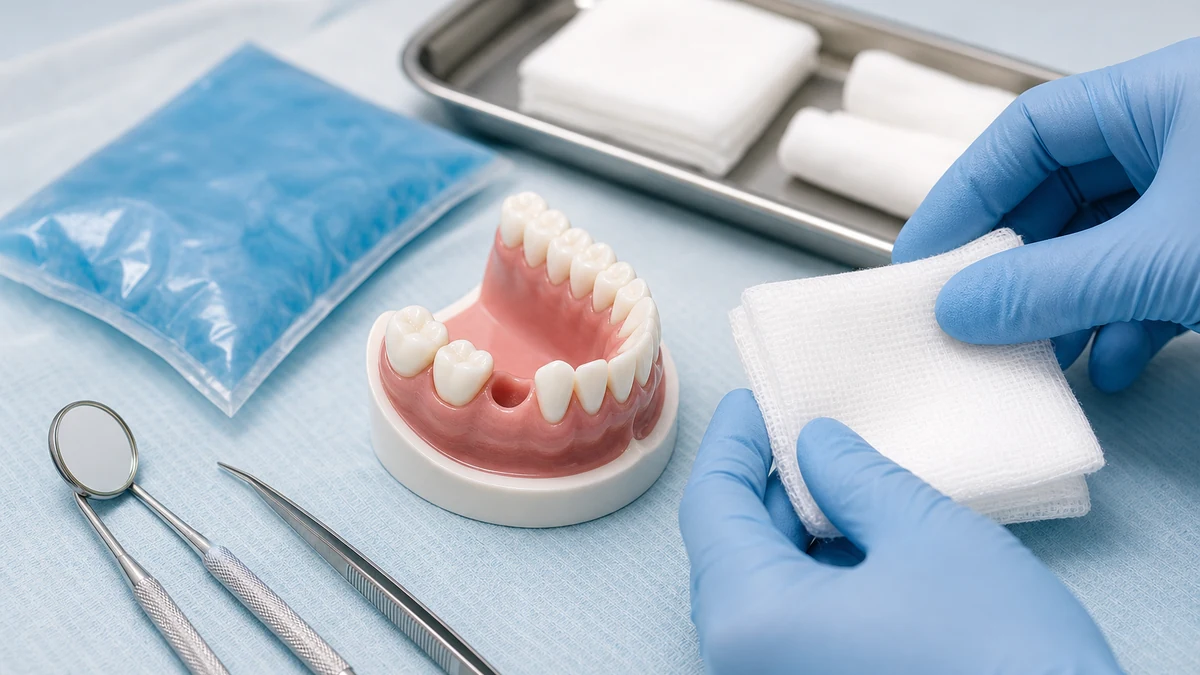
Tooth extraction aftercare is the set of steps you follow in the hours and days after a tooth is removed, and it largely decides how smoothly you heal. Whether the procedure was a simple extraction or a surgical one, the goal is the same: protect the blood clot that forms in the socket, keep the area clean, and manage swelling and discomfort. Most people recover well within one to two weeks when they follow a few simple rules, and the first 24 hours matter most.
This guide walks through what to expect at each stage, the do's and don'ts that protect healing, and the warning signs that mean you should contact a dentist rather than wait it out.
What happens during the first 24 hours after an extraction?
In the first 24 hours a blood clot forms in the empty socket, sealing it and starting the healing process. Some oozing and mild swelling are normal. Bite gently on gauze, rest, and avoid anything that could dislodge the clot, as it is the foundation for everything that follows.
Your dentist will usually place a folded piece of sterile gauze over the socket and ask you to bite down with steady pressure for 30 to 60 minutes. This helps the clot form. If light bleeding continues, replace the gauze and bite down again. A small amount of pink-tinged saliva for the rest of the day is expected and not a cause for alarm.
During this window, keep your head slightly elevated, even when resting, and avoid strenuous activity. Do not rinse, spit forcefully, or drink through a straw, because the suction and pressure can pull the fragile clot loose.
How should you manage pain and swelling?
Manage pain with the relief your dentist recommends, taken before the anaesthetic fully wears off, and reduce swelling with a cold compress on the cheek for short intervals. Most discomfort peaks within two to three days and then eases steadily as the socket begins to close.
For swelling, hold a cold pack or wrapped ice against the outside of your cheek for around 10 to 15 minutes at a time during the first day, with breaks in between. After the first 24 to 48 hours, gentle warmth can feel more soothing and help any residual swelling settle. Sleeping with an extra pillow for a night or two can also reduce facial puffiness.
The single most important rule of aftercare is to protect the clot. Almost every healing problem after an extraction traces back to a clot that was disturbed too early.
Take any prescribed or recommended pain relief as directed and never exceed the stated dose. If your dentist prescribes antibiotics, finish the full course even once you feel better. Avoid aspirin unless specifically advised, as it can encourage bleeding.
What can you eat and drink while the socket heals?
Stick to soft, cool or lukewarm foods for the first few days and chew on the opposite side of your mouth. Good choices include yoghurt, mashed potato, soup that is not too hot, smoothies eaten with a spoon, scrambled eggs, and porridge. Stay well hydrated with water.
Avoid hot drinks, alcohol, and anything spicy, crunchy, or chewy in the early days, as these can irritate the wound or disturb the clot. Small seeds, crisps, nuts, and popcorn are best left until later because fragments can lodge in the socket. As the area becomes more comfortable, usually after three to four days, you can gradually return to a more normal diet.
Foods to favour early on
- Yoghurt, custard, and other soft dairy
- Mashed potato, soft pasta, and well-cooked vegetables
- Lukewarm soups and broths (spooned, never through a straw)
- Scrambled eggs, porridge, and ripe banana
Things to avoid in the first days
- Hot drinks, alcohol, and carbonated drinks
- Hard, crunchy, spicy, or very chewy foods
- Smoking and vaping, which slow healing considerably
- Drinking through a straw
How do you keep the area clean without disturbing healing?
Keep your mouth clean by brushing gently and avoiding the socket itself for the first day. From the second day, rinse very gently with warm salt water after meals to keep the area clear. Do not swish vigorously, as forceful rinsing can dislodge the clot and delay recovery.
To make a salt-water rinse, dissolve about half a teaspoon of salt in a cup of warm water, then let it move slowly around your mouth and tip it out gently rather than spitting hard. Repeat a few times a day, especially after eating. Continue brushing your other teeth as normal, taking care near the extraction site, and ease back to your usual routine over the following week.
Smoking deserves a special mention. Tobacco smoke and the act of drawing on a cigarette both interfere with clot stability and reduce blood flow to the healing tissue, which raises the risk of complications. Avoiding it for as long as possible, ideally at least 48 to 72 hours, gives the socket the best chance to heal cleanly.
Healing timeline: what to expect week by week
Healing is gradual, and the soft tissue closes well before the bone underneath fully remodels. The table below gives a general guide, though your own timeline depends on the tooth removed, whether the extraction was surgical, and your overall health.
| Stage | What is happening | How you may feel |
|---|---|---|
| First 24 hours | Blood clot forms and stabilises | Mild bleeding and swelling, managed with gauze and rest |
| Days 2 to 3 | Swelling peaks then begins to ease | Discomfort usually at its highest, then improving |
| Days 3 to 7 | Gum tissue starts to close over the socket | Steadily more comfortable; soft diet still wise |
| Weeks 1 to 2 | Surface healing largely complete | Most normal activity and eating resume |
| Weeks to months | Bone gradually fills and remodels the socket | No symptoms; healing continues unseen |
If the gap left by the tooth will eventually be restored, your dentist can talk you through options once the area has healed. People often ask how this fits with longer treatments, and a clear plan, similar to a step-by-step dental implant recovery timeline, helps set realistic expectations for the months ahead.
When should you contact a dentist after an extraction?
Contact a dentist promptly if you have heavy or unstoppable bleeding, severe or worsening pain after day three, a high temperature, spreading swelling, or a foul taste and smell from the socket. These can signal infection or a dislodged clot, and early treatment makes a real difference.
A particular concern is dry socket, where the protective clot is lost too soon and the underlying bone is exposed. It typically causes a deep, throbbing ache two to four days after the extraction, sometimes radiating to the ear, along with a noticeably unpleasant taste. Dry socket is treatable, but it needs a dentist to clean and dress the socket, so do not try to manage it alone. If you notice these signs, or if pain that was settling suddenly returns, seek advice rather than waiting.
Sustained throbbing pain in the area can also stem from causes unrelated to the socket itself, so it is worth understanding the wider range of causes of toothache and when to see a dentist. When in doubt, a quick call to your dental team is always safer than guessing.
Aftercare for surgical and wisdom tooth extractions
Surgical extractions, including impacted teeth, tend to involve more swelling and a slightly longer recovery than simple extractions. The same principles apply, protect the clot, manage swelling, eat soft foods, but you may have stitches and need a little more patience. Your dentist will explain whether the stitches dissolve on their own or need removing.
Lower wisdom teeth in particular can leave more tenderness and limited jaw opening for a few days, which usually eases with gentle care. If your procedure was a more involved removal, the broader guidance on what to expect from wisdom tooth extraction covers the surgical side in more detail. Whatever the case, following your own dentist's specific instructions always takes priority over general advice, because they know the exact details of your treatment.
With sensible aftercare, most extractions heal predictably and uneventfully. Rest in the first day, treat the socket gently, eat soft and cool foods, and keep an eye out for the warning signs above. Doing the simple things well is what turns a removed tooth into a quiet, complete recovery.
Related reading

Parvin Safaraliyev
Dr. Parvin Safaraliyev graduated from Istanbul University Faculty of Dentistry. She specializes in oral and maxillofacial surgery, combining advanced surgical techniques with comprehensive patient care. She integrates th…
View full profile →