
 English
  Turkce
  Deutsch
  Francais
  Russkij
  العربية
  Espanol
  Italiano
  Nederlands
  Balgarski
  Romana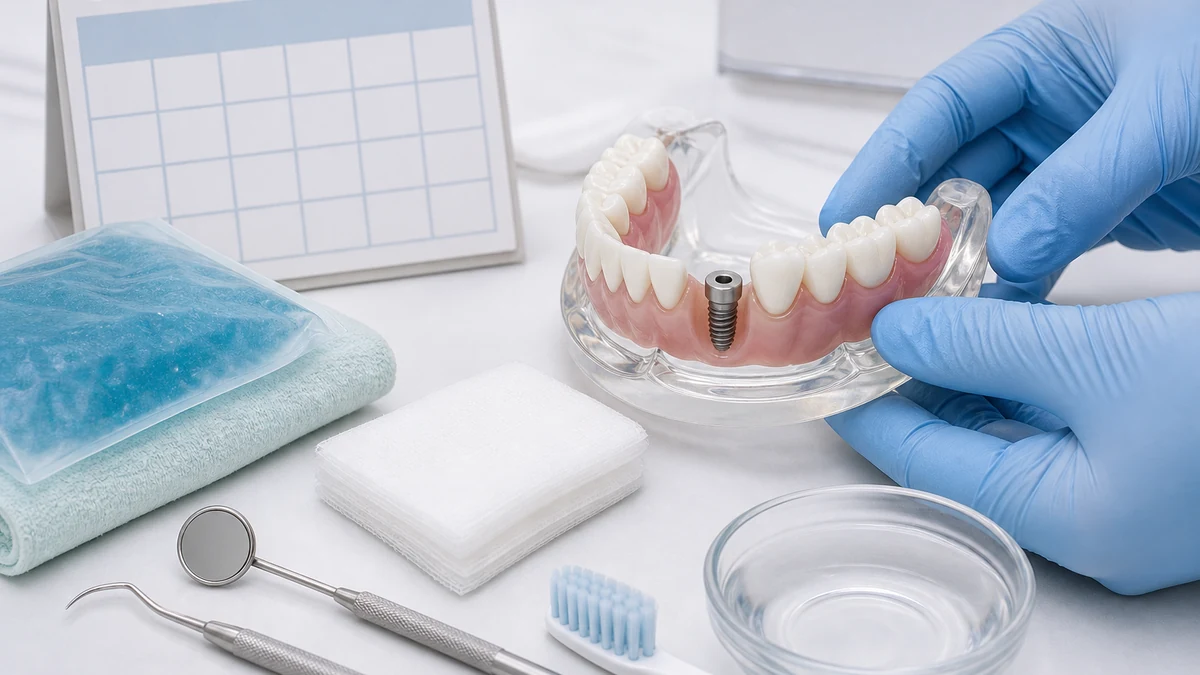
A dental implant recovery timeline maps how your mouth heals after a titanium implant is placed in the jaw, from the first 24 hours through to the final crown. Recovery after dental implants in Turkey or anywhere else happens in predictable stages: early soft-tissue healing in the first weeks, then a longer phase called osseointegration, where the bone fuses to the implant. Knowing what is normal at each step helps you plan your trip, your aftercare, and your time off work.
Every mouth heals at its own pace, so treat the weeks below as a general guide rather than a fixed schedule. Your surgeon's instructions always take priority over any article.
How long does it take to recover from dental implants?
Most people feel comfortable within one to two weeks after implant surgery, but full healing takes longer. The bone needs roughly three to six months to fuse with the implant before the permanent crown is fitted. Comfort and complete integration are two separate milestones.
The reason for the gap is biology. Soft tissue (the gum) closes quickly, but bone remodels slowly. That slower phase is what protects the long-term stability of the implant, so the wait is doing useful work even when you feel fine.
The week-by-week recovery timeline
First 24 to 48 hours
Mild bleeding, swelling, and tenderness are normal right after surgery. Bite gently on gauze if there is oozing, apply a cold compress to the cheek in short intervals, and rest with your head slightly raised. Stick to cool, soft foods and avoid rinsing vigorously, as the area needs to form a stable clot. Any prescribed pain relief is usually most effective when taken before the local anaesthetic fully wears off.
Days 3 to 7
Swelling typically peaks around day two or three, then begins to settle. Bruising on the cheek or jaw can appear and fade over the week. Most discomfort is manageable with simple analgesics by now. Keep the surgical site clean with the gentle salt-water rinses your clinician recommends, and continue brushing the rest of your teeth normally while avoiding the implant area.
Week 2
By the second week, the gum tissue is closing and visible swelling has usually gone. If non-dissolving stitches were used, they are often removed around this point. Many people return to office work within a few days, though anything strenuous should still wait. You can gradually reintroduce firmer foods as comfort allows, chewing on the opposite side.
Weeks 3 to 6
The soft-tissue healing is largely complete and daily life feels normal again. Beneath the surface, osseointegration is underway: the jawbone is steadily bonding to the implant surface. There is little to see from the outside, but this quiet phase is the foundation of a stable result, so it is important not to overload the area.
Months 3 to 6
This is the main integration window, and the length varies with the site and your bone quality. Lower-jaw implants often fuse faster than upper-jaw ones, and a bone graft or sinus lift can extend the wait. Once your dentist confirms the implant is firmly fused, usually with a clinical check and sometimes an X-ray, the abutment and permanent crown can be placed. After the crown is fitted, the implant functions much like a natural tooth. With good care and regular check-ups, modern implants have high long-term success rates and can last many years.
| Stage | What is happening | How you may feel |
|---|---|---|
| First 48 hours | Clot forms, initial swelling | Tender, mild swelling |
| Days 3 to 7 | Swelling settles, gum heals | Improving daily |
| Week 2 | Gum closes, stitches out | Mostly comfortable |
| Weeks 3 to 6 | Early osseointegration | Normal routine |
| Months 3 to 6 | Bone fuses, crown fitted | Function restored |
What helps healing after implant surgery?
Gentle, consistent aftercare helps most. Keep the area clean as instructed, eat soft and nutritious food at first, stay hydrated, and avoid disturbing the wound. Above all, do not smoke, because tobacco notably slows healing and raises the risk of implant complications.
A few habits make a measurable difference during recovery:
- Follow your clinician's rinsing and cleaning routine precisely.
- Avoid smoking and limit alcohol while the site heals.
- Skip hard, crunchy, very hot, or spicy foods in the early days.
- Rest for the first 48 hours and ease back into exercise gradually.
- Take any prescribed medication exactly as directed.
- Attend every follow-up appointment, even when you feel well.
If you are combining treatment with travel, it is worth understanding the wider process behind dental implants in Turkey so you can schedule your stay around the early healing window and any planned reviews.
When should you call your dentist?
Some discomfort and swelling are expected, but certain signs warrant a prompt call. Contact your dental team if you notice heavy or returning bleeding, swelling that worsens after day three, a fever, increasing pain rather than improving pain, pus or a bad taste, or an implant that feels loose.
None of these is common, and most recoveries are uneventful. Still, dental tourism patients should plan how to reach a local dentist or their treating clinic remotely once home, so any concern can be assessed quickly rather than left to worsen.
Comfort returns in days, but true integration takes months. Respecting that quiet healing window is the single best thing you can do for a lasting result.
Aftercare for the long term
Once healed, an implant is looked after much like a natural tooth: brush twice daily, clean between the teeth, and see a dentist for regular check-ups and professional cleaning. Good gum health protects the bone that supports the implant, which is why daily maintenance matters as much as the surgery itself. Untreated gum inflammation around an implant can, over time, threaten its stability, so flagging any bleeding or soreness early keeps small problems small.
If you are still weighing your options, comparing the differences between implants and dentures can clarify which route suits your needs, and reading about long-term implant aftercare will show what daily upkeep involves before you commit. A clear picture of the full journey, from surgery through recovery to maintenance, makes for a calmer, better-informed decision.
Related reading
Mahir Yılmaz
Dr. Mahir Yılmaz graduated from Istanbul University Faculty of Dentistry. He has extensive academic knowledge and clinical experience in general and restorative dentistry. With many years of professional experience, Dr. …
View full profile →