
 English
  Turkce
  Deutsch
  Francais
  Russkij
  العربية
  Espanol
  Italiano
  Nederlands
  Balgarski
  Romana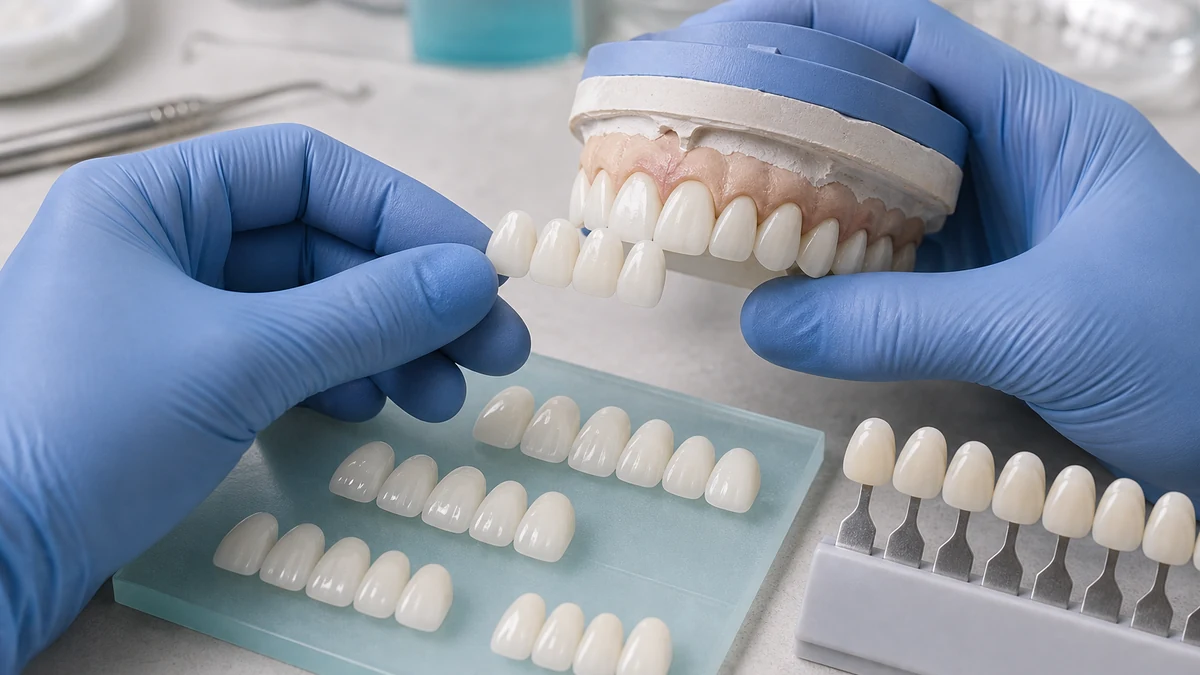
One of the first questions patients ask about veneers in Turkey is a simple one: how many do I actually need? The honest answer is that the number is not fixed. Dental veneers are thin shells of porcelain or composite bonded to the front of teeth, and the right count depends on how many teeth show when you smile, the result you want, and your budget. Common choices are 4, 6, 8, or a full set of 16 to 20, and the difference between them is mostly about how wide your visible smile is.
This guide explains how the smile line, your goals, and your individual teeth shape the decision, so you can have a more informed conversation at your consultation rather than fixating on a single number.
How Do Dentists Decide How Many Veneers You Need?
Dentists count the teeth visible in your natural smile, then plan veneers across that zone so the result looks even. Most people show 6 to 10 upper teeth when they smile, so treatment usually targets that range rather than every tooth in the mouth.
The aim is balance. A veneer changes a tooth's colour, shape, and alignment, so if only the two front teeth are treated, they can look brighter or different from the teeth beside them. Working across the full smile zone keeps everything consistent. Your dentist will also check your smile line, the curve your upper teeth follow against your lower lip, because that line sets the natural starting and finishing point for treatment.
The most common veneer counts
- 4 veneers: the four upper front teeth (incisors). Suits a narrow smile or minor fixes on the most visible teeth.
- 6 veneers: the front six teeth, canine to canine. A popular middle-ground choice for an even, natural upgrade.
- 8 veneers: extends to the first premolars, covering a slightly wider smile.
- 10 to 12 veneers: a wider smile that shows back teeth, or to correct several teeth at once.
- Full set (16 to 20): a complete smile makeover, often part of a wider treatment plan.
Do You Need Veneers on Your Bottom Teeth?
Not always. Many people show far less of their lower teeth when they smile and talk, so a natural-looking result is often possible with upper veneers alone. Lower veneers are added when the bottom teeth are clearly visible or noticeably mismatched in colour or shape.
If you have a low lip line, your lower teeth may barely appear, and treating only the upper arch can give a balanced look at a lower cost. If you have a fuller smile that reveals both arches, your dentist may suggest matching lower veneers so the colours blend. Whitening the lower teeth instead of veneering them is sometimes a simpler, more affordable option worth discussing. The decision comes down to what shows when you speak and smile, not a rule that both arches must always match.
What Factors Change the Number You Need?
Your smile width, the problem being corrected, and your budget all shift the count. A patient fixing one chipped tooth has very different needs from someone wanting a uniform, brighter smile across the whole visible zone, even though both might be considering veneers.
Several things influence the final plan:
- How much you show when you smile. A broad smile that reveals back teeth needs more veneers for an even result than a narrow one.
- The goal. Repairing a single chip or gap may need only one or two veneers, while a full colour and shape change calls for more. Veneers are a recognised option for closing small gaps and masking discolouration, but the count follows the visible area, not just the flaw.
- Symmetry. Dentists often work in even numbers across matching teeth so the two sides of your smile mirror each other.
- Tooth condition. Heavily damaged or weakened teeth may be better suited to a crown than a veneer, which can change the mix. It helps to understand how veneers, crowns, and bonding differ before deciding.
- Budget. More veneers means a higher total cost, so many people prioritise the most visible teeth first.
A good plan starts from how your smile actually looks, not from a target number. The right count is the one that gives a natural, even result for your face.
Is More Veneers Always Better?
No. The best plan treats the teeth that affect your smile and preserves healthy ones. Placing veneers on teeth that never show, purely to reach a round number, removes natural enamel for little visible benefit and adds unnecessary cost.
Fitting most porcelain veneers involves removing a thin layer of enamel, and once removed it does not grow back, so the tooth will usually need a veneer or crown from then on. This is a permanent change worth weighing carefully. A measured plan that targets your visible smile zone respects your natural teeth while still giving an even, attractive result. Minimal-prep and no-prep options exist for some cases and remove less enamel, so ask your dentist whether they suit you. More is not automatically better; the goal is a healthy, balanced smile rather than the maximum possible number of veneers.
Approximate Cost by Number of Veneers
Because veneers are usually priced per tooth, the total scales with the count. The figures below are approximate ranges for porcelain veneers in Turkey and vary by case, materials, and clinic. They are a rough guide only, not a quote, and significantly lower than typical UK prices for comparable work.
| Number of veneers | Typical use | Approximate cost range (Turkey) |
|---|---|---|
| 4 veneers | Front teeth, minor fixes | £600–£1,200 |
| 6 veneers | Even front-smile upgrade | £900–£1,800 |
| 8 veneers | Wider visible smile | £1,200–£2,400 |
| Full set (16–20) | Complete smile makeover | £2,400–£6,000 |
Ranges are approximate and depend on your individual case. For a clear picture of what your smile needs, the materials involved, and an accurate quote, an assessment of dental veneers in Turkey with a specialist is the reliable next step.
The Takeaway
There is no single correct number of veneers. For most people, 6 to 8 covers the smile zone for a natural, even result, while 4 suits focused fixes and a full set supports a complete makeover. The right count balances your smile line, your goals, the health of your teeth, and your budget. A personalised consultation, ideally with a digital preview of the proposed result, is the best way to settle on a plan that fits your face rather than a number you read online.

Mehmet Şimşek
Dentist Mehmet Şimşek graduated from Istanbul University Faculty of Dentistry. He applies treatment methods aimed at creating natural and healthy smiles. He continues his work in implantology, prosthetic dental treatment…
View full profile →