
 English
  Turkce
  Deutsch
  Francais
  Russkij
  العربية
  Espanol
  Italiano
  Nederlands
  Balgarski
  Romana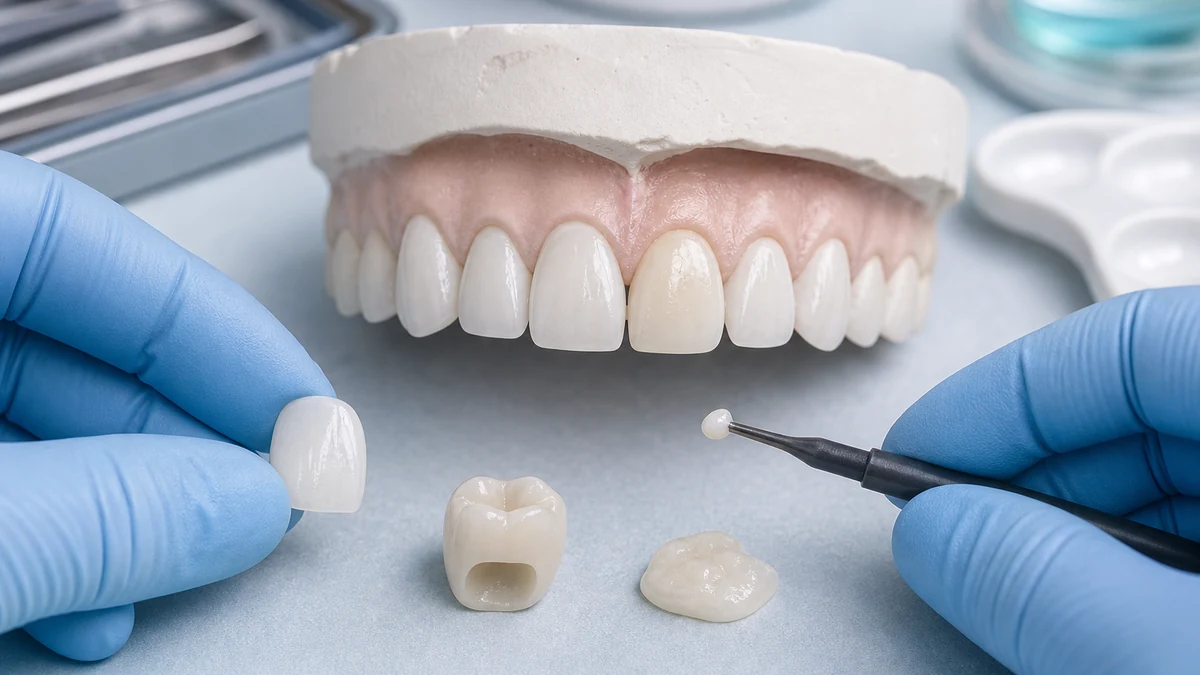
Veneers, crowns and composite bonding are three of the most common ways to restore or enhance a tooth, but they solve different problems. Veneers are thin shells bonded to the front of a tooth for cosmetic reasons, crowns are caps that cover the whole tooth to protect and rebuild it, and bonding shapes tooth-coloured resin directly onto the surface to repair small flaws. Choosing between veneers vs crowns vs bonding comes down to how much of the tooth needs work, your budget and how long you want the result to last. This guide compares the three treatments side by side so you can see which option fits your case before discussing it with a dentist.
Veneers vs crowns vs bonding: side-by-side comparison
The table below summarises the main practical differences. Costs are approximate, vary by case and country, and tend to be significantly lower in Turkey than in the UK or US. Treat these figures as general guidance rather than a quote.
| Factor | Veneers | Crowns | Bonding |
|---|---|---|---|
| What it covers | Front surface of the tooth | The entire tooth | A small area or single flaw |
| Best for | Cosmetic improvement of visible teeth | Heavily damaged or weak teeth | Minor chips, gaps and reshaping |
| Tooth preparation | Some enamel usually reduced | Significant tooth reshaping | Minimal, often none |
| Typical lifespan | Often 10 to 15+ years with care | Often 10 to 15+ years with care | Around 3 to 8 years |
| Treatment time | Usually two visits | Usually two visits | Often a single visit |
| Strength under chewing | Moderate (cosmetic, not structural) | High (rebuilds and protects) | Lower (best for light wear) |
| Approximate cost per tooth | Mid to higher range | Mid to higher range | Lowest (most budget-friendly) |
| Reversibility | Mostly irreversible | Irreversible | Often reversible |
What are veneers, crowns and bonding?
Veneers are thin custom shells bonded to the front of a tooth to improve colour and shape. Crowns are caps that cover the whole tooth to restore a damaged or weakened one. Bonding applies tooth-coloured resin directly to fix small chips, gaps or stains.
The key distinction is coverage. A veneer dresses only the visible face of a tooth, so it is mainly cosmetic and works best when the underlying tooth is healthy. A crown encases the entire tooth above the gumline, which makes it the stronger, more protective option after a large filling, a root canal or a fracture. Bonding is the most conservative of the three, building up resin to repair a localised flaw without altering much of the natural tooth. Understanding this difference is the foundation of choosing the right treatment.
How much tooth does each treatment remove?
Bonding usually removes little or no enamel, veneers need a thin layer reduced from the front of the tooth, and crowns require the most reshaping because the whole tooth is trimmed to fit the cap. As a rule, the more structural the repair, the more preparation it involves.
This matters because enamel does not grow back. Bonding is often reversible, which makes it appealing for younger patients or those wanting a low-commitment fix. Veneers involve a modest, permanent reduction so the shell sits flush and looks natural. Crowns remove the most tooth structure, but that trade-off is justified when a tooth is cracked, has a large cavity or has been root-treated and needs protecting from further damage. A good dentist always explains how much enamel, if any, will be removed before you agree to proceed, and will favour the most conservative option that still solves the problem.
Which lasts longer: veneers, crowns or bonding?
Veneers and crowns generally last longest, often 10 to 15 years or more with good care, while bonding typically lasts around 3 to 8 years before it needs refreshing. No restoration is permanent, and lifespan depends heavily on your habits and oral hygiene.
Crowns and porcelain veneers resist wear and staining well because they are made from durable ceramics. Bonding uses composite resin, which is softer, more prone to chipping and can gradually pick up stains from coffee, tea, red wine and tobacco. The practical upside of bonding is that small chips can often be repaired chairside rather than replaced. Grinding or clenching, biting hard objects and poor gum health shorten the life of all three. Whichever you choose, regular check-ups help catch minor issues early and protect your investment.
How do the costs compare?
Bonding is usually the cheapest option per tooth because it needs no laboratory work and often just one visit. Veneers and crowns cost more because they involve custom-made ceramics and two appointments, with prices broadly similar between the two. Exact figures depend on the material and the number of teeth.
As an approximate, evergreen guide, bonding often sits in the lower hundreds per tooth, while veneers and crowns typically run several times higher. These figures are approximate and vary by case, clinic and material. Across the board, all three are significantly more affordable in Turkey than in the UK or US, without that meaning lower standards, which is part of why many international patients explore dental veneers in Turkey when weighing up value. For a closer look at how the two veneer materials differ on price and longevity, our guide to porcelain versus composite veneers breaks the options down further. Always confirm whether a quoted price covers the consultation, any temporaries and follow-up care.
Which treatment should you choose, and when?
Choose bonding for minor cosmetic fixes on healthy teeth, veneers to improve the look of several visible front teeth, and crowns when a tooth is structurally weak, heavily filled or has had a root canal and needs full protection. The right choice follows the condition of the tooth, not just the look you want.
Consider bonding if you have a small chip, a minor gap or want a fast, low-cost, reversible touch-up. Consider veneers if you are improving the colour, shape or alignment of front teeth that are otherwise sound and want a natural, lasting finish. Consider a crown if a tooth is cracked, has a large old filling or has been root-treated, since only full coverage can rebuild and shield it. Many smile makeovers combine treatments, for example crowns on damaged molars and veneers on healthy front teeth. If your tooth has lost significant structure, our overview of the dental crown procedure explains what full coverage involves. There is no universally best option, only the one that best fits your tooth, your goals and an honest clinical assessment from a qualified dentist.
Frequently asked questions
Is a crown stronger than a veneer or bonding?
Yes. A crown covers the whole tooth and rebuilds its structure, so it withstands chewing forces best and protects weak or cracked teeth. Veneers and bonding are mainly cosmetic and suit teeth that are still structurally sound rather than badly damaged.
Can bonding be upgraded to veneers or crowns later?
Often yes. Because bonding is minimally invasive, many patients start with it and move to veneers or a crown later if they want greater durability or a more natural finish. Your dentist will assess the underlying tooth and enamel before recommending any change.
Which option is best for a chipped front tooth?
It depends on the size of the chip. Small chips are usually repaired with bonding in a single visit, while larger ones or recurring damage may suit a veneer. A crown is reserved for a front tooth that is badly broken or weakened and needs full protection.
Related reading

Mehmet Şimşek
Dentist Mehmet Şimşek graduated from Istanbul University Faculty of Dentistry. He applies treatment methods aimed at creating natural and healthy smiles. He continues his work in implantology, prosthetic dental treatment…
View full profile →