
 English
  Turkce
  Deutsch
  Francais
  Russkij
  العربية
  Espanol
  Italiano
  Nederlands
  Balgarski
  Romana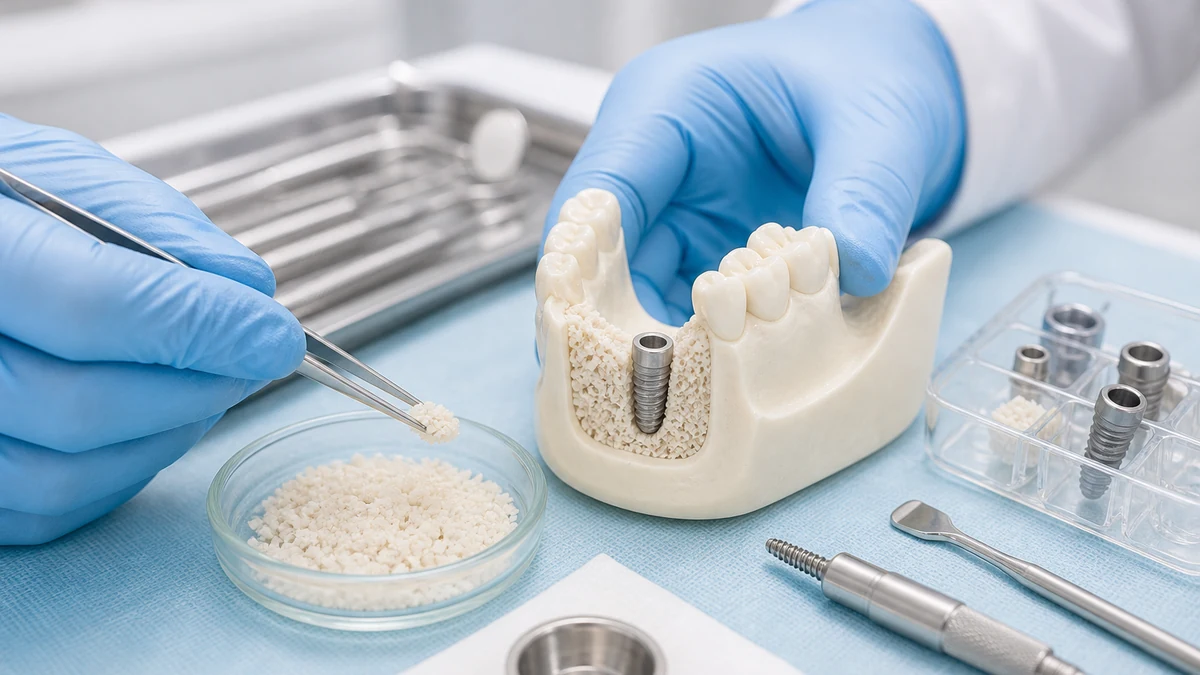
Bone grafting before dental implants is a minor procedure that rebuilds lost jawbone so an implant has a solid foundation to anchor into. When a tooth is missing for a while, the bone that once supported it shrinks. If too little remains, an implant cannot be placed safely until the ridge is rebuilt. A graft adds material that your body gradually replaces with its own new bone over several months.
For many people exploring tooth replacement, the surprise is learning that an implant cannot simply be screwed into any jaw. Implants rely on healthy bone to grip the titanium post. Where that bone has thinned or receded, a graft is often the step that makes treatment possible. This guide explains what dental bone grafting is, who needs it, how the procedure and healing work, and the honest considerations, including approximate costs, so you can weigh up dental implant treatment in Turkey with realistic expectations.
What is a dental bone graft and why might you need one?
A dental bone graft adds bone material to a deficient area of the jaw to restore lost volume. It is needed when the jawbone is too thin or too short to hold an implant securely, most often after long-term tooth loss, gum disease or an extraction that has left the ridge weakened.
After a tooth is lost, the surrounding bone is no longer stimulated by chewing and slowly resorbs, a process that can begin within months. The result is a narrower, shorter ridge that may not support an implant. Grafting reverses that deficit by giving your body a scaffold on which to build fresh bone. Common reasons a graft is recommended include:
- Long-standing tooth loss. The longer a gap is left untreated, the more bone tends to be lost, which is why timing matters.
- Advanced gum disease. Periodontitis destroys the bone that anchors teeth, often leaving the ridge too weak for an implant.
- Difficult or traumatic extractions. Some teeth are removed along with surrounding bone, leaving a defect that grafting can repair.
- Upper back teeth near the sinus. The sinus cavity can sit close to the ridge here, sometimes calling for a sinus lift, a graft that creates room for an implant. Our guide on the sinus lift procedure explains when this is needed.
- Long-term denture wear. Pressure from removable dentures can accelerate ridge shrinkage over time.
What types of bone graft are used for implants?
The main types are an autograft, using your own bone; an allograft, using processed human donor bone; a xenograft, using treated animal-derived bone, usually bovine; and a synthetic graft made from biocompatible materials. All act as a scaffold that your body replaces with its own bone over time, and your surgeon selects the most suitable option for your case.
None of these stays in place permanently. The graft material encourages your own bone cells to grow into the area and remodel it as natural bone. The choice depends on the size and position of the defect and your medical history:
- Autograft. Bone taken from elsewhere in your body, such as the chin or jaw. It integrates very predictably but involves a second site, so it is used for larger defects.
- Allograft. Sterilised, processed bone from a tissue bank. It avoids a second surgical site and is widely used for routine grafting.
- Xenograft. Bone of animal origin, typically bovine, thoroughly treated to remove all organic material, leaving a safe mineral scaffold.
- Synthetic (alloplastic) graft. Laboratory-made materials such as calcium phosphate that the body tolerates well and gradually replaces.
There is no single best graft material. The right choice depends on how much bone is missing, the position in the mouth and your individual health, which is why this decision is always made with your surgeon after assessment.
How is the bone grafting procedure performed?
Bone grafting is usually carried out under local anaesthetic. The surgeon opens the gum, places the graft material onto the deficient bone, often covers it with a protective membrane to guide healing, and closes the gum with stitches. The procedure is minor, and most patients describe it as comparable to having a tooth out.
The approach varies with the type and size of graft, but the sequence is consistent:
- Assessment and planning. The surgeon examines your mouth and usually takes a 3D scan to measure the bone and plan how much material is needed.
- Anaesthetic. The area is numbed with local anaesthetic so the procedure is not painful. Sedation can be offered for anxious patients.
- Placing the graft. The gum is gently opened, the bone is prepared, and the graft material is positioned in the defect.
- Protecting the site. A resorbable membrane is often laid over the graft to hold it in place and encourage the right cells to grow.
- Closing up. The gum is stitched over the site and healing begins. In some cases a small graft is done at the same time as an extraction or implant placement.
How long does it take to heal after a bone graft?
Initial gum healing takes one to two weeks, but the graft itself needs roughly three to six months, sometimes longer, to mature into bone strong enough to hold an implant. Healing time depends on the graft size, its location and your general health, so your surgeon will confirm when you are ready for the implant.
Surface discomfort settles quickly, while the deeper work of turning the graft into load-bearing bone cannot be rushed. Most surgeons advise the following in the early weeks:
- Manage swelling and discomfort with prescribed or over-the-counter pain relief and a cold compress for the first day or two.
- Eat soft foods and avoid chewing over the graft site until it has settled.
- Keep the area clean as directed, often with gentle rinsing rather than brushing near the wound at first.
- Avoid smoking. Smoking significantly impairs bone healing and raises the risk of graft failure, so stopping is strongly advised.
- Attend follow-ups so the surgeon can confirm the graft has matured before the implant is placed.
Because the implant is usually placed only once the graft has fully integrated, grafting adds several months to the treatment timeline. Planning for this in advance, particularly if you are travelling for treatment, keeps expectations realistic.
What are the risks and considerations of bone grafting?
Dental bone grafting is generally safe and well established, but, like any minor surgery, it carries some risk. Possible issues include swelling, bruising, infection, or the graft not integrating fully, which may require it to be redone. Smoking, uncontrolled diabetes and poor oral hygiene all reduce the chances of success.
Most grafts heal without trouble and serious complications are uncommon, but no procedure can be guaranteed and a graft can occasionally fail to take. Factors worth discussing with your surgeon include:
- Healing-related risks such as infection, delayed healing or partial loss of the graft, which may mean a further procedure.
- Health conditions like uncontrolled diabetes or certain medications that can slow bone healing.
- Smoking, one of the most significant and modifiable risk factors for graft and implant failure.
- Added time and cost, since grafting lengthens treatment and adds to the overall fee.
For most people, these considerations are outweighed by the benefit: making implant treatment possible where it otherwise would not be. Many patients once told they had too little bone go on to successful treatment after grafting. If you are weighing up the wider journey, our overview of the dental implant recovery timeline sets out what follows once the graft has healed.
How much does a dental bone graft cost?
Costs vary widely with the type and size of the graft. As an approximate guide, a small dental bone graft in the UK often ranges from around £250 to £1,200, while larger or more complex grafts cost more. Treatment in Turkey is typically more affordable, though all prices are approximate and vary by case.
Several factors influence the final figure, so a personalised quotation after assessment is the only reliable way to know your cost. The main variables are the amount of bone needed, the graft material chosen, whether a membrane or sinus lift is involved, and whether the graft is done alone or with an extraction or implant. Turkey is a popular destination for implant care because the same procedures are generally available at significantly lower prices than in the UK, the US or much of Western Europe, without that meaning the dentistry elsewhere is poor. When comparing quotes, look beyond the headline price to the materials, the surgeon's experience and the aftercare.
Ultimately, a bone graft is best understood not as an obstacle but as groundwork: by rebuilding the foundation first, it gives your future implant the stability it needs to last. If you have been told you may not have enough bone for implants, it is worth asking a specialist whether grafting could change that, as for many patients it opens the door to treatment they assumed was out of reach.
Related reading

Mahir Yılmaz
Dr. Mahir Yılmaz graduated from Istanbul University Faculty of Dentistry. He has extensive academic knowledge and clinical experience in general and restorative dentistry. With many years of professional experience, Dr. …
View full profile →