
 English
  Turkce
  Deutsch
  Francais
  Russkij
  العربية
  Espanol
  Italiano
  Nederlands
  Balgarski
  Romana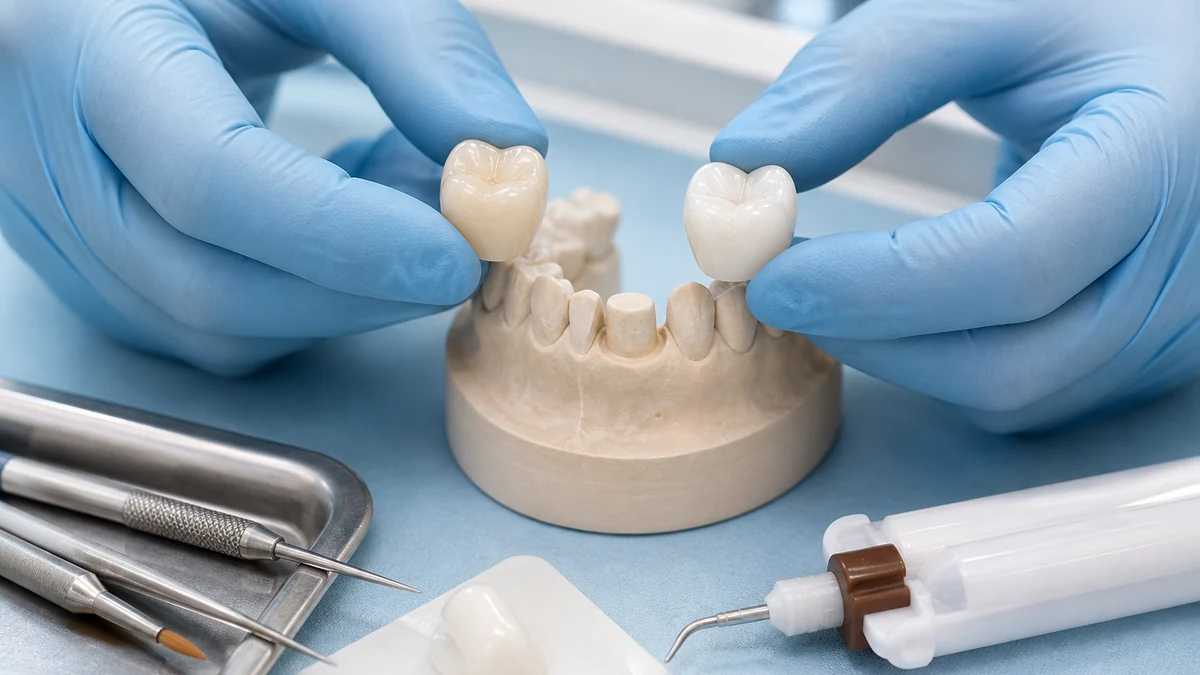
A temporary crown is a short-term cap that protects a prepared tooth while the permanent crown is custom-made in a dental laboratory. If you are having a crown fitted in Turkey or anywhere else, understanding temporary versus permanent crowns helps you know what to expect between appointments: why the gap exists, how long the temporary stage lasts, and how to look after the tooth in the meantime. This guide explains the difference in plain terms, written for international patients planning treatment in Istanbul.
What is the difference between a temporary and a permanent crown?
A temporary crown is a provisional cap, usually made of acrylic or composite resin, that shields the tooth for a few weeks. A permanent crown is the final restoration, made from durable materials like porcelain or zirconia, custom-built to match your bite and tooth colour for years of use.
The two serve very different jobs. The temporary is fitted on the same day the tooth is reshaped, holding the space and protecting the exposed tooth until the laboratory finishes the real thing. It is cemented with a deliberately weak, removable adhesive so the dentist can take it off easily at the next visit. The permanent crown is cemented firmly and is meant to stay put. Because a temporary is mass-shaped chairside rather than precisely milled, it will look and feel slightly less refined, and that is entirely normal for this stage. If you want the full sequence of how a crown is made and fitted, our step-by-step guide to the dental crown procedure covers each appointment in detail.
Why do you need a temporary crown first?
You need a temporary crown because a permanent one cannot be made instantly. Once a tooth is reshaped to take a crown, the underlying dentine is exposed and vulnerable, so the temporary protects it from sensitivity, bacteria and movement while the permanent crown is fabricated, which typically takes one to two weeks.
There are several reasons the temporary stage matters:
- Protection: a reshaped tooth has had its hard outer enamel removed, leaving sensitive dentine. The temporary seals it against hot, cold and sweet triggers.
- Function: it lets you keep eating, speaking and smiling reasonably normally while you wait.
- Position: teeth drift surprisingly fast. The temporary stops the neighbouring and opposing teeth from shifting into the space, which would stop the permanent crown fitting.
- Gum shaping: it helps the gum line settle into the right contour so the final crown sits neatly against the gum.
Some clinics now offer same-day crowns milled on site, which skip the temporary altogether. Where a case is suitable for that approach, the dentist will discuss it; otherwise the two-visit route with a temporary remains the standard and reliable method.
How long does a temporary crown last?
A temporary crown is designed to last only until the permanent crown is ready, usually one to three weeks. It is not built for long-term wear, so it should be replaced promptly. Wearing a temporary for many months is not advisable, as the weak cement and softer material break down over time.
During that short window the temporary does its job well, but it is more fragile than the final crown. The cement is intentionally weak, the material is softer, and the fit is approximate rather than exact. For international patients, the timing is usually planned around your trip so the permanent crown is fitted before you fly home. If a delay means you would be left in a temporary for an extended period, raise it with the clinic so an interim plan can be arranged rather than leaving a provisional crown in place indefinitely.
How should you care for a temporary crown?
Care for a temporary crown gently to avoid dislodging it. Avoid hard, sticky or chewy foods on that side, chew on the opposite side where possible, and clean carefully rather than skipping the area. With sensible habits a temporary stays comfortably in place until the final fit.
A few practical points make the temporary stage easier:
- Eat carefully: avoid chewing gum, toffee, hard nuts and crusty bread on the crowned tooth, as these can pull or crack a temporary.
- Brush gently: keep brushing the tooth, but with a soft touch around the gum line.
- Floss with care: slide floss out sideways rather than lifting it straight up, which can tug the temporary off.
- Manage sensitivity: mild sensitivity to temperature is normal; lukewarm food and a sensitive-teeth toothpaste help.
If a temporary crown comes loose or falls out, it is not an emergency, but you should contact your dentist so it can be recemented and the tooth kept protected. Keep the crown if it falls off and avoid biting directly on the exposed tooth in the meantime.
What does the permanent crown appointment involve?
At the second visit the dentist removes the temporary, cleans the tooth, then checks the permanent crown for fit, bite and colour before cementing it. Any small adjustments to the bite are made chairside, and once everything feels right the crown is bonded firmly into place.
The permanent crown should feel natural within a day or two, blending with the surrounding teeth. Because it is custom-made to match your shade and shape, the difference from the temporary is usually obvious and welcome: a smoother surface, a more accurate fit and a colour that matches your other teeth. Mild tenderness or temperature sensitivity for a short while afterwards is common and tends to settle as the tooth adjusts. How long that final crown then serves you depends on the material and your care; our guide on how long dental crowns last sets out realistic lifespans, and if you are still deciding on a material, our comparison of zirconia, E-max and metal-ceramic crowns explains the trade-offs.
When should you contact your dentist during the temporary stage?
Contact your dentist if the temporary crown falls out, cracks, feels sharp, causes ongoing pain rather than mild sensitivity, or if the bite feels noticeably high. Prompt attention keeps the tooth protected and stops the surrounding teeth from drifting before the permanent crown is fitted.
Most temporary-crown stages pass without any problem, but it is worth knowing the signs that warrant a quick message to the clinic. A high or uneven bite that does not settle, a temporary that keeps coming loose, swelling around the gum, or persistent throbbing pain are all reasons to get in touch rather than wait. For international patients, your patient coordinator can advise on whether something can wait until your final appointment or needs attention sooner. Honest, early communication is always the safest approach with any dental restoration.
Related reading

Berkan Tik
Dentist Berkan Tik graduated from Istanbul University Faculty of Dentistry. He has worked in various clinics focusing on implantology, prosthetic dental treatments, aesthetic dentistry, and digital dentistry applications…
View full profile →