
 English
  Turkce
  Deutsch
  Francais
  Russkij
  العربية
  Espanol
  Italiano
  Nederlands
  Balgarski
  Romana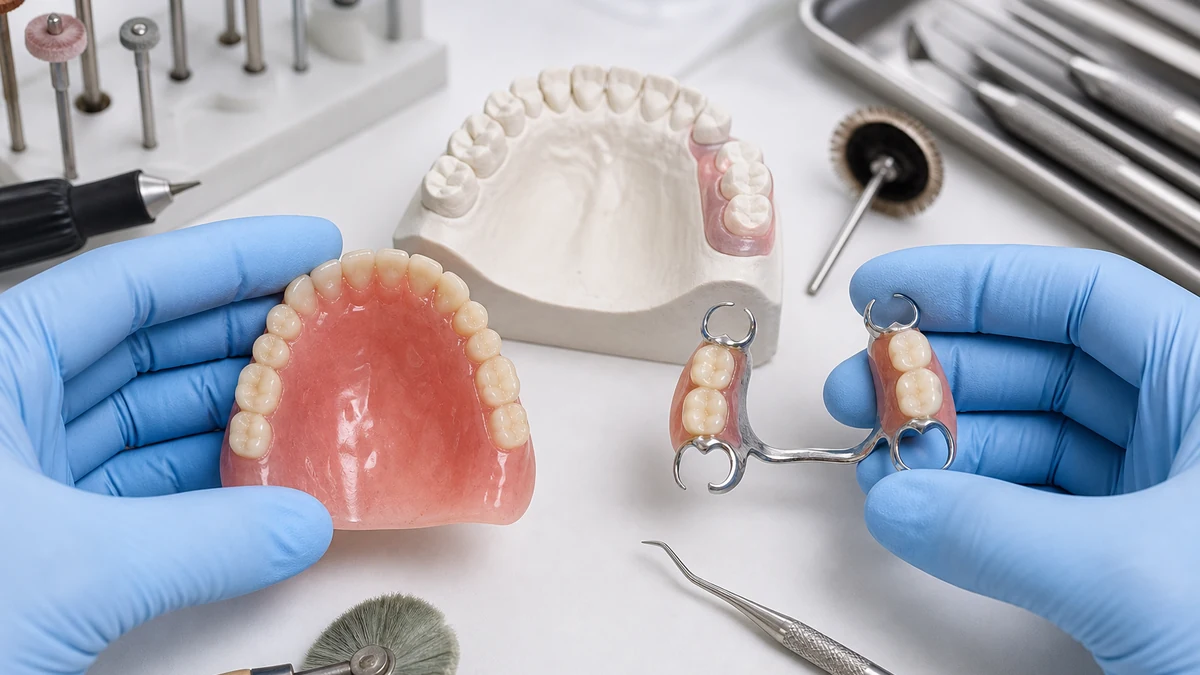
Choosing between complete and partial dentures is one of the first decisions people face when they lose several teeth or a full arch. Both are removable appliances that replace missing teeth and restore chewing, speech and the look of your smile, but they suit very different situations. A complete (full) denture replaces all the teeth in an upper or lower jaw once no natural teeth remain, while a partial denture fills the gaps left by a few missing teeth and clips onto the ones you still have. This guide compares complete vs partial dentures across the factors that matter most, including candidacy, comfort, appearance, cost and care, so you can work out which removable denture best fits your mouth, lifestyle and budget.
Complete vs partial dentures: side-by-side comparison
The table below summarises the main differences. Costs are approximate, vary by case and country, and tend to be significantly lower in Turkey than in the UK or US. Treat these figures as general guidance rather than a quote, and confirm exactly what any price includes before you proceed.
| Factor | Complete dentures | Partial dentures |
|---|---|---|
| Who it suits | All teeth missing in one jaw | Several teeth missing, some natural teeth remain |
| How it stays in place | Suction, ridge shape, sometimes adhesive | Clasps or precision attachments on natural teeth |
| Effect on remaining teeth | Not applicable, no teeth left | Helps stop neighbouring teeth drifting |
| Adjustment period | Often longer, full arch is new | Usually shorter, fewer teeth replaced |
| Typical lifespan | Around 5 to 8 years before relining or remaking | Around 5 years, varies with wear and gum changes |
| Approximate cost | Higher per arch (more teeth) | Lower (fewer teeth, smaller appliance) |
| Maintenance | Daily cleaning, periodic relines | Daily cleaning plus care of natural teeth |
What is the difference between complete and partial dentures?
The key difference is how many teeth are missing. Complete dentures replace an entire arch when no natural teeth remain and rest directly on the gums. Partial dentures replace only the missing teeth and attach to the remaining natural teeth with clasps, filling the gaps while keeping your own teeth in place.
That single distinction shapes almost everything else. A complete denture relies on the shape of your gum ridge and a degree of suction to stay put, which is why fit and a well-formed ridge matter so much. A partial denture borrows support from your existing teeth, so the health of those anchor teeth is central to how well it works. Both are made from a gum-coloured acrylic base with replacement teeth set into it, and partials often add a lightweight metal or flexible framework for strength and a slimmer feel.
Who is a good candidate for each type of denture?
You are a candidate for a complete denture if you have lost, or are about to lose, all the teeth in one or both jaws. You suit a partial denture if you still have several healthy natural teeth that can anchor the appliance and fill specific gaps. A dentist confirms which option fits after examining your gums and remaining teeth.
For complete dentures, the condition of the gum ridge and jawbone influences stability, and people who have worn dentures for many years sometimes notice the ridge has shrunk, which can loosen the fit over time. For partial dentures, the strength and position of the supporting teeth are decisive, since clasps place extra load on them. Good gum health, sensible expectations and a willingness to keep up daily cleaning matter for both. If your remaining teeth are failing or the fit of a removable plate frustrates you, it is worth discussing fixed alternatives. Comparing all of your missing teeth replacement options with a clinician is the surest way to match the solution to your case.
Which dentures are more comfortable and natural-looking?
Comfort is individual, but partial dentures often feel more familiar sooner because they replace fewer teeth and your natural teeth help anchor them. Complete dentures usually need a longer adjustment period as your cheeks, tongue and bite adapt to a full arch. Both can look natural when the teeth and gum shade are well matched.
In the early weeks, new denture wearers commonly notice extra saliva, a fuller feeling and some changes to speech, all of which typically settle with practice. Upper complete dentures often cover the palate to aid suction, which a few people find takes getting used to, while many partials can be designed to leave more of the palate open. Modern materials, careful shade matching and natural gum contouring help dentures blend in, though no removable appliance feels exactly like natural teeth. If you want the closest thing to a fixed, secure feel, snap-on implant-retained dentures clip onto a small number of implants and dramatically reduce movement, which many patients find more comfortable for eating and speaking.
How long do complete and partial dentures last?
Both complete and partial dentures typically last around 5 to 8 years before they need relining, repairing or remaking, though this varies widely. Gums and bone change shape over time, so even a well-made denture will eventually need adjusting to keep a snug, comfortable fit. Regular check-ups help you stay ahead of problems.
Several factors affect how long either type serves you well. Natural changes to the gum ridge, day-to-day wear on the teeth, grinding habits and how carefully the denture is cleaned and handled all play a part. Partial dentures also depend on the ongoing health of the natural teeth that support them, so looking after those anchors protects the whole appliance. Dropping a denture can crack the base, and very hot water can warp it, so gentle daily care extends its life. Your dentist may suggest a reline, where the fitting surface is refreshed, rather than a full remake when only the fit, not the teeth, has changed.
Which type of denture should you choose, and when?
The right choice is dictated mainly by how many teeth you have left. If an entire arch is missing, a complete denture is the standard removable solution. If you have healthy natural teeth around the gaps, a partial denture restores the missing teeth while preserving and protecting the ones you keep. A dentist makes the final call after a full assessment.
Beyond that core rule, think about your priorities. Choose a complete denture if all your teeth in a jaw are gone and you want an affordable, non-surgical way to restore a full smile and chewing function. Choose a partial denture if you want to fill specific gaps, stop neighbouring teeth drifting, and avoid removing healthy teeth. If stability is your main frustration, ask about implant-supported options, which can secure either type. Where some natural teeth are present but their long-term outlook is poor, it is also worth weighing whether a bridge or an implant might serve a small gap better than adding to a removable plate. There is no universally better denture, only the one that suits your remaining teeth, gum health, budget and goals, and an honest, personalised assessment from a qualified dentist is the best way to weigh the trade-offs above.
Frequently asked questions
Can a partial denture be made into a complete denture later?
Not directly. A partial denture is built around your remaining natural teeth, so if those teeth are later lost, a new complete denture is usually needed. Your dentist can plan ahead for this and discuss whether implants might secure a future full denture more comfortably.
Are partial dentures cheaper than complete dentures?
Usually yes, because a partial denture replaces fewer teeth and is a smaller appliance. Complete dentures cost more per arch as they restore a full set of teeth. Prices vary by case, material and country, and tend to be considerably lower in Turkey than in the UK or US.
How long does it take to get used to new dentures?
Most people adjust over a few weeks. Eating and speaking feel easier with practice, starting with soft foods and short reading aloud helps, and any sore spots can be eased by a quick adjustment. Complete dentures often take a little longer to settle than partials. Persistent discomfort should always be checked by your dentist.
Related reading

Mehmet Şimşek
Dentist Mehmet Şimşek graduated from Istanbul University Faculty of Dentistry. He applies treatment methods aimed at creating natural and healthy smiles. He continues his work in implantology, prosthetic dental treatment…
View full profile →