
 English
  Turkce
  Deutsch
  Francais
  Russkij
  العربية
  Espanol
  Italiano
  Nederlands
  Balgarski
  Romana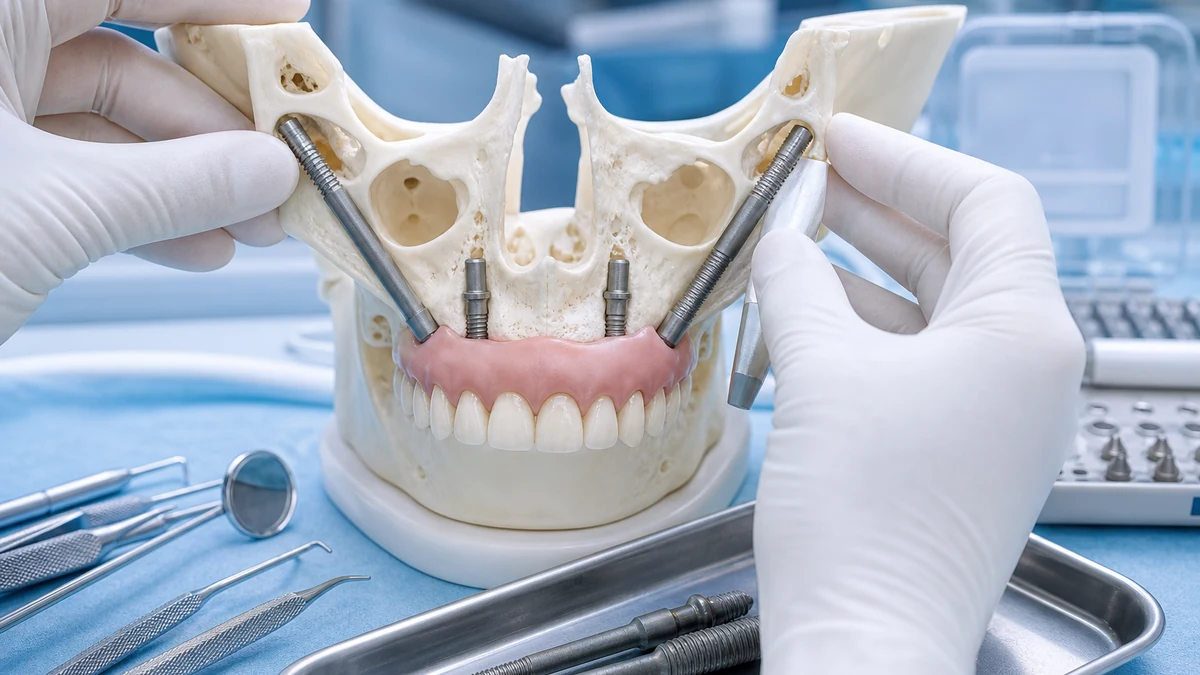
Zygomatic implants in Turkey are long dental implants anchored in the cheekbone (the zygoma) rather than the upper jaw, designed for patients with severe bone loss in the upper jaw. When the maxilla has resorbed too far to hold standard implants, these longer fixtures bypass the missing bone entirely and provide a stable foundation for a full set of fixed upper teeth. They are a recognised solution in oral and maxillofacial surgery for the atrophic upper jaw, and they often allow treatment without separate bone grafting.
What are zygomatic implants?
A zygomatic implant is an elongated titanium fixture, typically 30 to 52mm long, that passes through the upper jaw and engages the dense bone of the cheekbone. Conventional implants measure roughly 6 to 16mm and rely on healthy jawbone for support. Where that bone has shrunk after long-term tooth loss, gum disease or denture wear, the zygoma offers a reliable alternative anchor point.
Most full-arch cases use two zygomatic implants on each side, or a combination of zygomatic implants at the back and standard implants at the front where some bone remains. The fixtures then carry a fixed bridge, giving a fixed, non-removable result rather than a denture that sits on the gums.
Who is a candidate for zygomatic implants?
Zygomatic implants suit adults with severe upper jaw bone loss who cannot have standard implants without extensive grafting, or who want to avoid the long timeline that grafting adds. They are also an option when previous implants or grafts in the upper jaw have failed. A surgeon confirms suitability with a CT scan and clinical examination.
Good candidates are typically people who are missing most or all of their upper teeth, who have been told there is too little bone for ordinary implants, or who have worn upper dentures for years and want a fixed solution. The procedure is more demanding than routine implant work, so it belongs in experienced surgical hands. Comparing approaches with our overview of All-on-4 dental implants in Turkey can help clarify whether a standard full-arch option is enough or whether the zygomatic route is needed.
When zygomatic implants may not be suitable
Active sinus infection, untreated gum disease, certain bone conditions and some medications affecting bone healing can rule out or delay surgery. Heavy smoking and poorly controlled diabetes raise the risk of complications and slower healing. These factors do not always prevent treatment, but they must be assessed and managed beforehand.
How does the zygomatic implant procedure work?
The procedure is usually carried out under general anaesthetic or sedation in a single surgical session. After planning from a 3D scan, the surgeon places the zygomatic fixtures into the cheekbone and any additional standard implants where bone allows. In many cases a temporary fixed bridge is fitted within a day or two, so patients are rarely left without teeth.
- Assessment and planning: a CT scan maps the bone, sinuses and nerves so implant positions are planned precisely.
- Surgery: the zygomatic implants are placed into the cheekbone, often alongside conventional implants at the front of the jaw.
- Immediate temporary teeth: a provisional fixed bridge is commonly attached soon after surgery for function and appearance.
- Healing: the implants integrate with the bone over several months.
- Final restoration: the permanent bridge is fitted once healing is confirmed.
Recovery involves some swelling and bruising for the first week or two, managed with prescribed medication and a soft diet. Most people return to everyday activities within a few days, while full healing and the final bridge take a few months.
What are the benefits and risks?
The main benefit is fixed teeth for people previously told they were not implant candidates, usually without bone grafting and often with temporary teeth on the same day. As with any oral surgery, there are genuine risks, including sinus complications, infection and, rarely, implant failure, which a thorough assessment and skilled surgery aim to minimise.
- No bone grafting in most cases, which shortens the overall timeline.
- Fixed, stable teeth rather than a removable denture.
- Faster route to function, as temporary teeth are often fitted promptly.
- A solution for failed grafts or earlier unsuccessful implants.
Honest consideration matters with a procedure of this complexity. Possible complications include sinusitis, soft-tissue irritation, numbness and, uncommonly, the need to revise or replace a fixture. Long-term success depends on careful surgery, good oral hygiene and regular reviews. Where some bone remains, gentler restorative options such as a single tooth implant in Turkey may be more appropriate, so an individual assessment is essential.
How much do zygomatic implants cost in Turkey?
Costs are approximate and vary by case, but a full upper arch on zygomatic implants in Turkey typically ranges from around £6,000 to £12,000, considerably less than equivalent treatment in the UK, where it can exceed £20,000 to £30,000. The exact figure depends on how many zygomatic and standard implants are needed and the final bridge.
| Treatment | Approximate cost in Turkey (GBP) | Approximate cost in the UK (GBP) |
|---|---|---|
| Single zygomatic implant | £2,000–£4,000 | £6,000–£9,000 |
| Full upper arch (zygomatic-supported) | £6,000–£12,000 | £20,000–£30,000+ |
These ranges are evergreen estimates for guidance only and exclude travel and accommodation. Turkey is significantly more affordable largely because of lower clinic and living costs, not lower standards. A personalised quotation follows a scan and consultation. You can read more about full-arch options on our dental implants in Turkey page.
Frequently asked questions
Are zygomatic implants safe?
Zygomatic implants have been used in oral and maxillofacial surgery for over two decades and have high long-term success rates when placed by experienced surgeons. They carry the usual surgical risks, including sinus issues and infection, so careful planning, a detailed CT scan and an appropriately trained surgical team are essential.
How long do zygomatic implants last?
With good oral hygiene and regular check-ups, zygomatic implants can last many years, and studies suggest survival rates comparable to standard implants in suitable patients. Longevity depends on healthy gums, the absence of heavy smoking, and routine professional maintenance, so no fixed guarantee can be given for any individual case.
Do you need bone grafting with zygomatic implants?
In most cases zygomatic implants are chosen specifically to avoid bone grafting, because they anchor in the cheekbone rather than the resorbed upper jaw. This is a key advantage for patients with severe bone loss, as it shortens the timeline. Occasionally minor additional procedures are needed depending on individual anatomy.
Mahir Yılmaz
Dr. Mahir Yılmaz graduated from Istanbul University Faculty of Dentistry. He has extensive academic knowledge and clinical experience in general and restorative dentistry. With many years of professional experience, Dr. …
View full profile →