
 English
  Turkce
  Deutsch
  Francais
  Russkij
  العربية
  Espanol
  Italiano
  Nederlands
  Balgarski
  Romana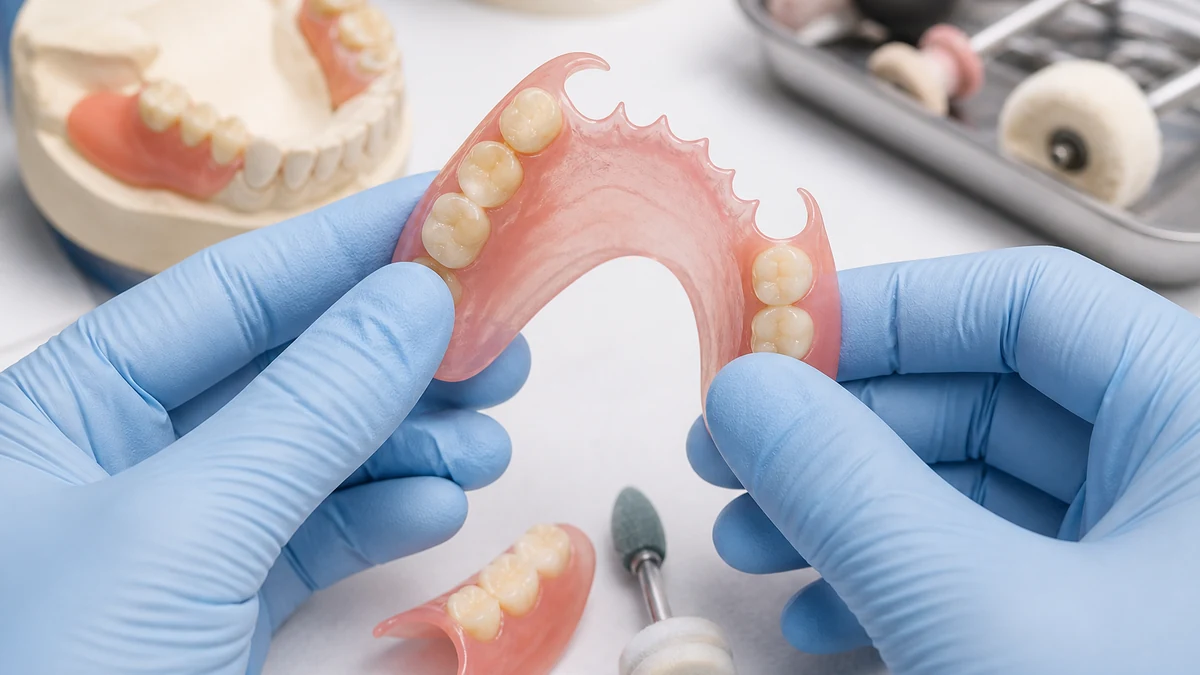
Flexible dentures are removable partial dentures built from a soft, gum-coloured nylon resin rather than the rigid acrylic and metal of a conventional plate. Often called flexible partials or by brand names such as Valplast, they bend slightly to fit snugly around your remaining teeth, with no visible metal clasps. For anyone in Istanbul or travelling for treatment who wants to replace a few missing teeth comfortably and discreetly, this lightweight, thin and naturally translucent base is the main reason flexible dentures have become a popular middle option between a standard partial and fixed treatment.
The defining feature is the material. Traditional partial dentures use a hard acrylic base, frequently stiffened by a metal framework with clasps that hook onto adjacent teeth. A flexible denture replaces that with a single piece of thin, pliable thermoplastic nylon, so the appliance flexes a little under load and grips the natural curves of your gums and teeth instead of relying on rigid metal hooks.
What are flexible dentures made of?
Flexible dentures are made from a thin, semi-flexible nylon thermoplastic that doubles as both the gum-coloured base and the clasps. There is no metal framework. The material is light, biocompatible and slightly translucent, so it blends with the surrounding gum tissue for a discreet result.
Because the nylon is pink and tooth-coloured at the clasp edges, the parts that wrap around your own teeth tend to disappear against the gum line. Denture teeth, usually acrylic, are set into this base to fill the gaps. The whole appliance is thinner and lighter than a metal-and-acrylic partial, which many wearers find more comfortable, especially on the palate or along the lower ridge.
Who is a good candidate for flexible dentures?
Good candidates are people missing one or several teeth, but not a whole arch, who have healthy remaining teeth and gums to support the denture. They suit anyone who reacts to acrylic, dislikes visible metal clasps, or wants a comfortable, lightweight partial while keeping their natural teeth.
Flexible partials work best when there are sound teeth either side of the gap to anchor against. They are a common choice for patients with a metal allergy or sensitivity, for those who want the most aesthetic removable option, and for people who need a partial that is gentle on tender gums. They are generally not suitable for replacing a full arch of teeth, because a full flexible denture has nothing firm to grip and tends to move too much. Severe gum disease, very few remaining teeth, or a need to add teeth later can also make them a poor fit. A dentist will examine your mouth and take impressions to confirm whether a flexible design is right for you, or whether a cast-metal partial, a bridge or implants would serve you better.
What are the benefits of flexible dentures?
The main benefits are comfort, a natural appearance with no metal showing, and a lightweight feel. The nylon base is thin and adapts to your mouth, and because it flexes rather than pressing rigidly, many wearers find it kinder to the gums than a hard acrylic plate.
- Aesthetics. Gum-coloured clasps replace metal hooks, so the denture is far less noticeable when you smile or speak.
- Comfort. The thin, pliable base flexes with everyday movement and often feels less bulky than a conventional partial.
- Metal-free. A sensible option for patients with a nickel or metal allergy, as there is no cast framework.
- Durable against fracture. The flexible nylon resists the cracking that can affect rigid acrylic if a denture is dropped.
- No adhesive needed. A well-fitted flexible partial grips the natural teeth and gums, so denture paste is usually unnecessary.
For replacing a small number of teeth without surgery, this combination of looks and comfort is the appliance's real selling point. If you are weighing removable against fixed solutions, our overview of missing teeth replacement options sets the choices side by side.
Considerations and drawbacks
Flexible dentures are not a perfect fit for every case, and being honest about the limits matters. The nylon material cannot usually be relined or repaired the way acrylic can, so if your mouth changes or a tooth is lost, you often need a new denture rather than an adjustment. They also tend to be a transitional or medium-term solution rather than a lifelong one.
Other points worth knowing: the soft base can be slightly harder to keep clean, as nylon is more porous than acrylic and can pick up stains or odour without careful daily hygiene. Because the denture flexes, it does not stabilise or splint loose teeth the way a rigid partial can, and it is not designed to bear the heavy biting forces of a full-arch replacement. Some patients also find the chewing efficiency a little lower than with a fixed option. None of this rules flexible dentures out; it simply means they are best matched to the right situation.
A flexible denture trades the rigidity and repairability of a metal partial for comfort and a metal-free, natural look, which is exactly the balance many partial-denture wearers are looking for.
How do flexible dentures compare with other options?
Flexible dentures sit between simple acrylic partials and more permanent solutions. A cast-metal partial is stronger, easier to adjust and splints teeth well, but shows metal clasps. A bridge or dental implants are fixed and longer-lasting, but cost more and, for implants, involve surgery. The right choice depends on your gaps, budget and priorities.
| Option | Fixed or removable | Best for | Approx. relative cost |
|---|---|---|---|
| Flexible (nylon) partial | Removable | Aesthetics, comfort, metal allergy | Low to mid |
| Cast-metal partial | Removable | Strength, adjustability, splinting | Mid |
| Dental bridge | Fixed | One or two gaps with sound neighbours | Mid to high |
| Dental implants | Fixed | Long-term, freestanding replacement | High |
If your remaining teeth are not strong enough to anchor a partial, a more stable approach may suit you better; our guide to complete versus partial dentures explains where each type fits. For a fixed, long-term result, many patients also consider dental implants in Turkey, which replace the tooth root rather than resting on the gums.
How much do flexible dentures cost in Turkey?
Costs in Turkey are typically a fraction of UK or US prices because of lower overheads, not lower standards. As a rough guide, a flexible partial denture in Turkey often falls somewhere in the region of £250 to £600 per arch, against noticeably more in the UK. All figures are approximate and vary by case.
The final price depends on how many teeth are being replaced, the brand of flexible material, and whether any extractions or gum treatment are needed first. Ask for a written treatment plan that lists what is included, so you can compare quotes fairly and understand what you are paying for.
When should you see a dentist?
See a dentist before choosing any denture so your remaining teeth and gums can be assessed properly, and book a review if a flexible denture starts to feel loose, rubs, or no longer looks right. A professional fitting and regular check-ups protect both the appliance and the natural teeth it relies on.
At Seren Klinik in Istanbul, our specialist team examines each case and explains the removable and fixed options clearly before any treatment begins, with realistic timelines built around international patients' travel. The aim is a comfortable, natural-looking result you can rely on, fitted to a standard you would expect at home, at a cost that makes the journey worthwhile.
Mehmet Şimşek
Dentist Mehmet Şimşek graduated from Istanbul University Faculty of Dentistry. He applies treatment methods aimed at creating natural and healthy smiles. He continues his work in implantology, prosthetic dental treatment…
View full profile →