
 English
  Turkce
  Deutsch
  Francais
  Russkij
  العربية
  Espanol
  Italiano
  Nederlands
  Balgarski
  Romana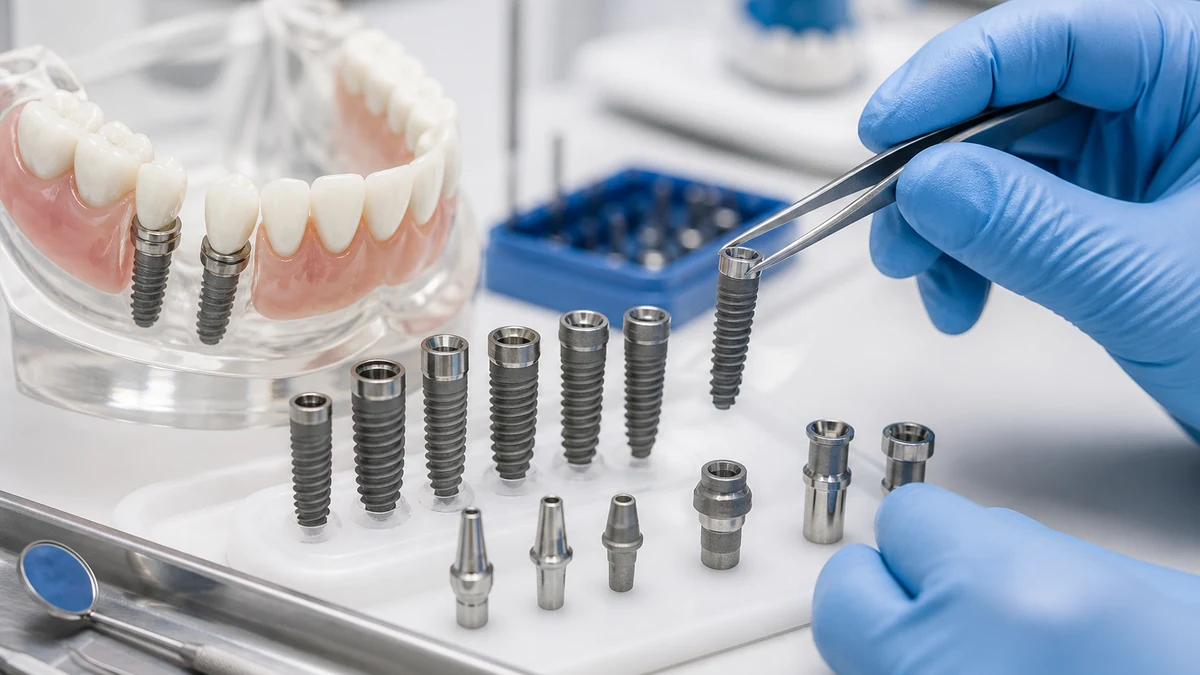
When you compare dental implant brands, you are really comparing the small titanium screw that replaces a missing tooth root, plus the engineering and clinical evidence behind it. The leading names in implant dentistry, including Straumann, Nobel Biocare, Osstem and Dentium, all make medically certified implants, and many patients researching dental implants in Turkey want to know which brand is fitted and why it matters. The honest answer is that the surgeon's skill, your bone quality and your aftercare usually influence the outcome more than the logo on the packaging, but brand differences in heritage, research and price are real and worth understanding.
Dental implant brands at a glance
The table below summarises the main implant systems by origin, market position and typical cost tier. Figures are approximate, evergreen and vary by case, clinic and country. They are offered for orientation only, not as a price quote.
| Brand | Origin | Position | Approx. cost tier (per implant) |
|---|---|---|---|
| Straumann | Switzerland | Premium, research-led | Higher (from around £700–£1,500) |
| Nobel Biocare | Sweden / Switzerland | Premium, pioneer brand | Higher (from around £700–£1,400) |
| Osstem | South Korea | Mid-range, high volume | Moderate (from around £350–£800) |
| Dentium | South Korea | Mid-range | Moderate (from around £350–£800) |
| MIS / Other value systems | Various | Value tier | Lower (from around £300–£700) |
Treatment in Turkey typically sits well below comparable UK or US fees across every tier, which is one reason the same premium brands often cost noticeably less here than they would at home, without the brand itself changing.
Premium brands: Straumann and Nobel Biocare
Straumann and Nobel Biocare are the most established names in implant dentistry. Nobel Biocare grew from the pioneering osseointegration work that made modern implants possible, and Straumann is widely recognised for its long record of published research and surface technology. Both invest heavily in studies, training and manufacturing quality control.
Their main practical advantages are a deep evidence base, broad compatibility of parts, and well-supported long-term documentation, which can matter if you ever need a future repair or replacement component. The trade-off is cost: premium systems sit at the higher end of every range above. For complex cases, limited bone, or patients who simply want the most extensively researched option, many clinicians consider them a reasonable choice.
Mid-range and value brands: Osstem, Dentium and others
Brands such as Osstem and Dentium have become very widely used worldwide, particularly across Europe and Asia. They are properly certified medical devices, manufactured to recognised standards, and they carry a growing body of clinical data. For many straightforward single-tooth or multiple-implant cases, they perform reliably.
The appeal is value: a lower price per implant frees budget for the parts that often matter most, such as the surgeon's time, imaging, and a well-made crown. The considerations are a shorter track record than the premium pioneers and, with some smaller value systems, slightly less global availability of matching components years down the line. None of this makes them unsafe. It is a question of evidence depth and long-term part support, not basic quality.
What actually affects implant success?
Brand is one factor among several, and rarely the decisive one. The surgeon's experience, accurate planning, your bone volume and density, good oral hygiene, not smoking, and attending follow-up appointments all carry significant weight. Studies suggest well-placed implants from reputable manufacturers have high long-term success rates across the board.
This is why a skilled team placing a mid-range implant can produce an excellent, durable result, while a premium implant placed poorly may not. When you read about dental implants in Turkey, focus first on the clinician's credentials and the planning process, then on the brand. A quality clinic will be transparent about which system they are fitting and why.
How do I choose the right implant brand for me?
Choose based on your case complexity, bone quality and budget rather than brand prestige alone. For complex or aesthetically demanding cases, or where bone is limited, a premium system with a deep evidence base is a sensible default. For straightforward cases, a certified mid-range brand often gives excellent value. Always ask your surgeon to recommend and explain their choice.
It also helps to think about the whole treatment, not just the screw. If you are weighing a full-arch solution, reading about the all-on-4 approach in Turkey alongside individual implants can clarify which path suits your number of missing teeth.
Does the implant brand affect the cost in Turkey?
Yes, brand is one of the main cost variables, alongside the number of implants, any bone grafting, and the type of final crown or bridge. Premium systems such as Straumann and Nobel Biocare sit at the higher end, while certified mid-range brands cost less. All prices in Turkey tend to be significantly lower than equivalent UK or US fees.
Because the total quote can change considerably depending on these choices, it is worth understanding the factors behind dental implant costs in Turkey before comparing clinics. A clear, itemised plan tells you far more than a single headline figure, and lets you see exactly what the brand contributes to the overall price.
Are cheaper implant brands safe?
Certified mid-range and value implant brands are safe when they are genuine, properly stored and placed by an experienced surgeon. They are regulated medical devices held to recognised standards. The main differences from premium brands are the depth of long-term research and the future availability of matching parts, not basic safety or reliability.
Considerations before you decide
Whichever brand you choose, a few honest points apply. No implant is guaranteed for life, although well-maintained implants can last 15 years or more, and often considerably longer, with good oral hygiene and regular check-ups. Implants are not suitable for everyone: active gum disease, uncontrolled diabetes, heavy smoking and insufficient bone may need to be addressed first, sometimes with grafting. Ask which exact brand and model will be used, request the implant passport or documentation afterwards, and confirm what aftercare and warranty support is offered. Our specialist team can advise which system suits your individual case during a consultation, based on your scans and overall health rather than a one-size-fits-all rule.

Mahir Yılmaz
Dr. Mahir Yılmaz graduated from Istanbul University Faculty of Dentistry. He has extensive academic knowledge and clinical experience in general and restorative dentistry. With many years of professional experience, Dr. …
View full profile →