 English
  Turkce
  Deutsch
  Francais
  Russkij
  العربية
  Espanol
  Italiano
  Nederlands
  Balgarski
  Romana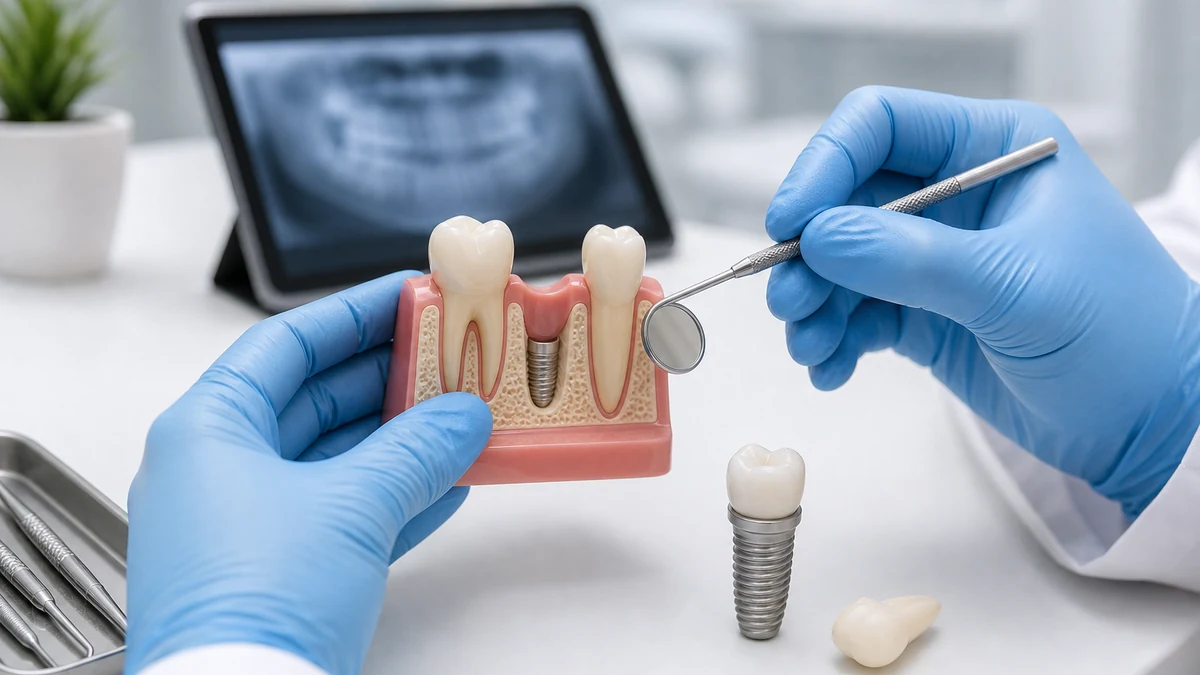
Dental implants in Turkey have become one of the most reliable ways to replace missing teeth, but the first question every patient should ask is a simple one: am I actually a candidate? Implant candidacy comes down to whether your jawbone, gums, and general health can support a titanium post that fuses to the bone and carries a crown for years to come. Most healthy adults who have lost one or more teeth qualify, yet eligibility is never automatic. A proper assessment of bone volume, gum condition, and medical history decides whether you can proceed now, after some preparation, or with an alternative treatment. This guide explains, honestly, what makes a good implant candidate and what does not.
What is dental implant candidacy?
Candidacy is a clinical judgement about whether your mouth and body can safely receive an implant and heal around it. It rests on four pillars: enough healthy jawbone to anchor the post, stable gums free of active infection, good overall health to support healing, and a realistic commitment to aftercare. A dentist confirms candidacy through a clinical exam and a 3D cone-beam CT scan, never by guesswork.
An implant is not a single object but a small system. A screw-shaped post sits in the jawbone, an abutment connects to it, and a crown, bridge, or denture sits on top. For that system to last, the bone must grip the post tightly during a healing process called osseointegration. If the foundation is weak or the surrounding tissue is unhealthy, even a perfectly placed implant can struggle. Candidacy, in other words, is about the foundation as much as the tooth.
Who is a good candidate for dental implants?
A good candidate is a healthy adult with one or more missing teeth, adequate jawbone, healthy gums, and a willingness to maintain the implant with daily cleaning and regular check-ups. Age itself is rarely a barrier; bone quality and general health matter far more than the number on your birth certificate.
In practice, you are likely to qualify comfortably if you tick most of the following:
- You have lost one tooth, several teeth, or a full arch and want a fixed, long-lasting replacement.
- Your jaw has finished growing (generally late teens or older), so the bone is mature and stable.
- Your gums are healthy, or any gum disease has been treated and brought under control.
- You have enough bone height and width, or you are open to a graft to build it up.
- Your general health is reasonable and any chronic conditions, such as diabetes, are well managed.
- You are a non-smoker, or you are prepared to stop around the time of surgery and healing.
Patients missing a full arch are often surprised to learn they still qualify even with significant tooth loss. Solutions such as the All-on-4 technique for a full arch are specifically designed to work with the bone you have, often avoiding the need for extensive grafting.
What can make you a poor candidate?
The most common obstacles are insufficient jawbone, untreated gum disease, heavy smoking, and certain uncontrolled medical conditions. Few of these rule implants out permanently. Most are barriers that can be reduced or removed with preparation, which is why a thorough assessment matters before any decision is made.
Bone loss
When a tooth is missing for a long time, the jawbone beneath it shrinks. Too little bone leaves nothing for the implant to grip. This is one of the most frequent reasons a patient is not ready straight away, but it is usually solvable. A bone graft rebuilds the ridge, and a sinus lift adds height in the upper jaw, allowing many people who were once told no to proceed after a healing period.
Gum disease
Active periodontal disease is an infection of the tissues that support your teeth. Placing an implant into infected, unstable gums invites failure. The condition must be treated and stabilised first. Once the gums are healthy, candidacy is often restored.
Smoking and health conditions
Smoking restricts blood flow and slows healing, which raises the risk of implant failure. It does not make implants impossible, but stopping before and after surgery meaningfully improves the odds. Similarly, conditions such as poorly controlled diabetes, recent head or neck radiotherapy, or certain bone medications need careful review. The aim is always to manage the risk, not to dismiss the patient.
How is your candidacy assessed?
Candidacy is confirmed through a structured consultation: a review of your medical history, a clinical examination of your teeth and gums, and a 3D CT scan that measures bone volume in precise detail. Photographs and sometimes a digital plan complete the picture before any treatment is agreed.
A typical assessment follows clear steps:
- Medical history. Your dentist reviews conditions, medications, and habits that affect healing, including smoking and diabetes.
- Clinical examination. The gums, remaining teeth, and bite are checked for infection, instability, or grinding that could stress an implant.
- 3D imaging. A cone-beam CT scan maps the height, width, and density of your jawbone and locates nerves and sinuses.
- Treatment planning. The findings are combined into a plan that confirms whether you can proceed now, need preparation such as a graft, or would be better served by an alternative.
For international patients, much of this begins remotely. Clear photographs and an existing CT scan let a clinic give an informed early opinion before you travel, with the final confirmation made in person.
What if you are not currently eligible?
Not being eligible today rarely means never. Most barriers are temporary: a graft for thin bone, periodontal treatment for unhealthy gums, or a period of stopping smoking. After that groundwork, a large share of patients become suitable candidates and proceed successfully.
Where implants genuinely are not the right path, good alternatives exist. A fixed bridge can replace a missing tooth without surgery, and modern dentures, including implant-retained options, restore function and confidence. A responsible clinic will always present these honestly rather than push implants on a mouth that is not ready for them.
The best implant outcomes start with honest candidacy. A treatment that should be delayed or grafted first will last far longer than one rushed into an unprepared jaw.
What do dental implants cost for eligible patients?
For candidates who qualify, a single implant with crown in Turkey typically falls within an approximate range of £450 to £900, with full-arch solutions costing more. These figures are approximate and vary by case, bone condition, and the materials chosen, so treat them as a guide rather than a quote.
Turkey is substantially more affordable than the UK or United States for the same procedure, largely because of lower operating and living costs rather than any compromise on standards. Many international patients find the saving covers travel and accommodation and still leaves them better off. For a closer look at the difference, see how implant costs in Turkey compare with the UK, and remember that any preparatory work such as grafting adds to the total.
Why patients choose Turkey for implants
Beyond cost, patients value the experience and the technology available at established clinics. Quality care depends on accurate diagnostics, well-made restorations, and proper aftercare rather than on geography. If you are weighing your options, our specialist team can review your case and confirm whether dental implants in Turkey are suitable for you, and explain exactly what any preparation would involve before you commit.
Candidacy is the honest starting point of every successful implant journey. With healthy gums, adequate bone, and managed general health, most adults missing teeth can be excellent candidates, and where they are not yet ready, a clear plan usually gets them there.
Mahir Yılmaz
Dr. Mahir Yılmaz graduated from Istanbul University Faculty of Dentistry. He has extensive academic knowledge and clinical experience in general and restorative dentistry. With many years of professional experience, Dr. …
View full profile →