
 English
  Turkce
  Deutsch
  Francais
  Russkij
  العربية
  Espanol
  Italiano
  Nederlands
  Balgarski
  Romana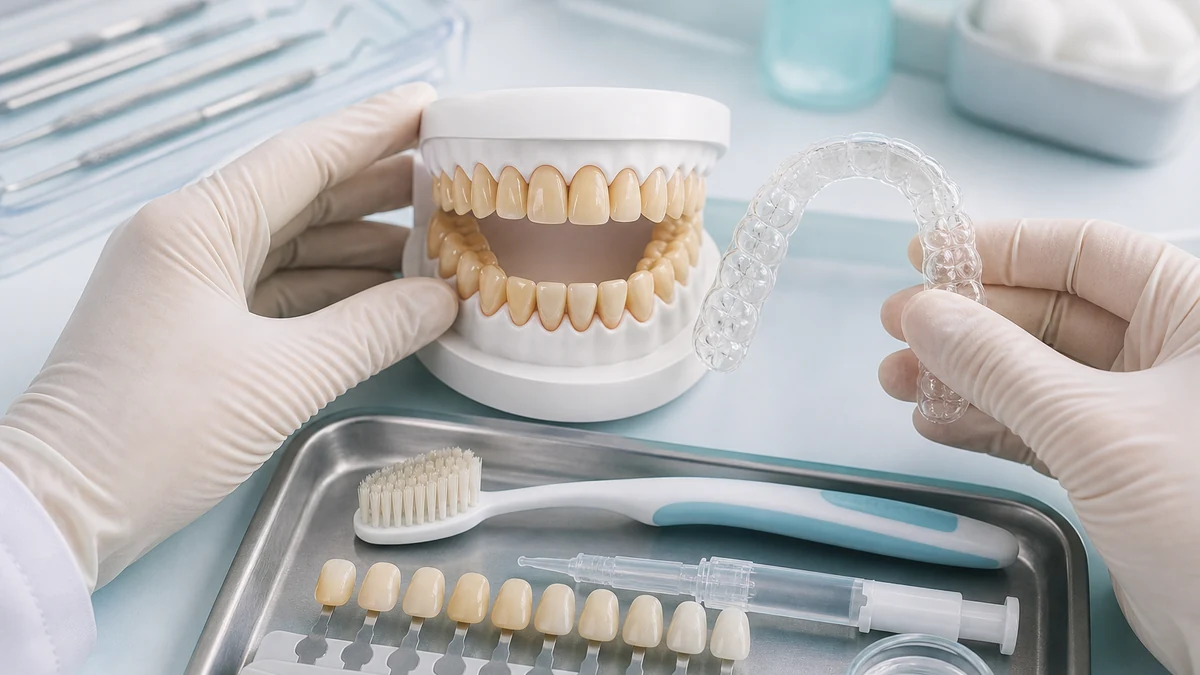
Teeth turn yellow when the white enamel thins and stains build up, letting the naturally darker layer beneath, the dentine, show through. The main causes are ageing, staining foods and drinks, smoking, certain medicines and inconsistent cleaning. Most discolouration responds well to professional whitening, though the right approach depends on what is causing it.
A yellow tinge to the teeth is one of the most common cosmetic concerns people raise with a dentist, and it rarely means anything is wrong with your oral health. Colour change is usually a mix of two things happening at once: the bright outer enamel wearing thinner over the years, and pigments from everyday food, drink and habits settling into the surface. Understanding which of these is driving the change matters, because it decides whether a simple adjustment to your routine will help or whether professional treatment is the better route. This guide explains the real reasons teeth lose their whiteness and the safe, lasting ways to bring it back.
Why do teeth turn yellow in the first place?
Teeth turn yellow mainly because enamel naturally thins with age, revealing the yellowish dentine underneath, and because pigments from food, drink and smoking stain the surface over time. Poor cleaning, some medicines and genetics also play a part. It is usually a gradual, harmless change rather than a sign of disease.
To understand the colour, it helps to know what a tooth is made of. The outer layer is enamel, which is hard and slightly translucent. Beneath it sits dentine, which is naturally more yellow. As enamel thins or picks up stains, more of that dentine shows through, and the tooth looks darker. Discolouration is generally grouped into two types:
- Extrinsic staining sits on the outside of the enamel and comes from pigments in food, drink and tobacco. This is the most common and the most responsive to cleaning and whitening.
- Intrinsic staining develops within the tooth structure itself, from causes such as ageing, certain medicines, trauma or excess fluoride in childhood. It tends to be more stubborn and may need professional treatment.
Knowing which type you are dealing with is the key to choosing the right solution, which is why a dentist will always assess the cause before recommending a treatment.
What are the main causes of yellow teeth?
The main causes are the natural ageing of enamel, staining foods and drinks such as coffee, tea, red wine and dark berries, smoking and tobacco, inconsistent brushing, certain medicines, genetics and dental trauma. Most people have a combination of these working together rather than a single cause.
In practice, several factors usually overlap. The most common contributors include the following:
- Ageing. Enamel thins and wears throughout life, so even well-cared-for teeth tend to look a little darker over the decades. This is the single most universal cause.
- Food and drink. Coffee, tea, red wine, cola and deeply coloured foods such as berries, curries and tomato-based sauces deposit pigments that gradually stain enamel. Our guide on managing coffee, tea and wine staining covers practical ways to limit the effect.
- Smoking and tobacco. Tar and nicotine cause some of the most noticeable and persistent yellow-to-brown staining, and the effect builds steadily over time.
- Inconsistent cleaning. When brushing and flossing are irregular, plaque and surface stains accumulate, and the teeth look dull and yellowed.
- Certain medicines. Some antibiotics taken in childhood, and a few other medications, can cause intrinsic discolouration that sits within the tooth.
- Genetics. People naturally inherit different enamel thickness and shades, so some start with brighter or more translucent teeth than others.
- Trauma. A knock to a tooth can damage the inner pulp and cause a single tooth to darken over time, often years after the injury.
Can you prevent your teeth from turning yellow?
You cannot stop enamel ageing entirely, but you can slow staining considerably. Brush twice a day and floss, limit deeply coloured drinks or use a straw, rinse with water after them, do not smoke, and keep up regular dental cleanings. These habits will not whiten teeth, but they protect the colour you have.
Prevention is about reducing the daily wear and staining that dull the teeth, and a few consistent habits make a real difference over time:
- Keep up a thorough daily routine. Brushing twice a day with fluoride toothpaste and flossing once a day removes the plaque and surface film that stains cling to.
- Be mindful of staining drinks. Sipping coffee, tea, wine or cola through a straw and rinsing your mouth with water afterwards both help limit contact with the enamel.
- Avoid smoking. Not using tobacco is one of the most effective things you can do for the long-term colour and health of your teeth.
- See your dentist or hygienist regularly. A professional clean removes hardened tartar and built-up surface stains that brushing cannot shift, keeping the teeth brighter between visits.
- Do not over-brush. Scrubbing too hard or with a very abrasive paste can wear enamel down faster, which ironically makes teeth look more yellow, so brush gently.
How do you whiten yellow teeth for good?
The most reliable, longest-lasting results come from professional whitening carried out or supervised by a dentist, sometimes paired with a hygienist clean first. At-home kits and whitening toothpastes can lighten mild surface stains, but they work more slowly and modestly, and very dark or intrinsic stains may need other treatments.
There is no single permanent fix, since teeth can re-stain over time, but the right treatment can produce a marked and lasting improvement. The realistic options range from gentle daily measures to professional care:
- Whitening toothpaste. These contain mild abrasives or low levels of active ingredients that remove surface stains. They help maintain results but cannot change the natural shade of the tooth.
- Dentist-supervised home whitening. Custom trays with a professional-strength gel let you whiten gradually at home with proper guidance. This is a popular and controlled approach.
- In-clinic professional whitening. A higher-strength treatment applied by the dental team gives the fastest and most noticeable results in a single or small number of visits. You can read more about the options on our teeth whitening in Turkey page.
- Treatments for intrinsic stains. When discolouration sits within the tooth and will not respond to bleaching, options such as internal bleaching for a single dark tooth, or veneers and bonding for the visible front teeth, may be more effective.
It is worth setting realistic expectations. Whitening lightens the existing shade rather than producing an unnaturally bright white, and how long the result lasts depends heavily on your habits afterwards. Our guide on how long teeth whitening lasts explains what to expect and how to maintain the result.
Is whitening safe, and are there any risks?
Professional whitening is considered safe and effective when carried out or supervised by a dental professional. The most common side effect is temporary tooth sensitivity, which usually settles within a few days. Whitening is not suitable for everyone, so a dental assessment beforehand is important to confirm it is right for you.
Whitening has a strong safety record, but a few honest points are worth knowing before you start:
- Sensitivity is common but temporary. Many people notice short-lived sensitivity to hot or cold during or just after treatment, and it typically fades within days.
- It does not work on dental work. Whitening only changes natural enamel, so crowns, veneers and fillings keep their original colour and may need replacing to match a newly whitened smile.
- Existing problems should be treated first. Whitening over untreated decay or gum disease can cause discomfort, so a check-up beforehand matters.
- Unsupervised products carry more risk. Very high-strength or unregulated kits bought without professional advice can irritate the gums or harm enamel if misused.
Always have whitening assessed and ideally carried out by a qualified dental professional. A proper examination confirms the cause of the discolouration, rules out underlying problems, and makes sure the treatment is both safe and suited to your teeth.
The reassuring conclusion is that yellowing teeth are usually a normal, treatable part of everyday life rather than a sign that something is wrong. By understanding what is causing the colour change, protecting your enamel with good daily habits, and choosing professionally guided whitening when you want a brighter smile, you can restore and keep a noticeably whiter result for the long term.
Related reading

Mehmet Şimşek
Dentist Mehmet Şimşek graduated from Istanbul University Faculty of Dentistry. He applies treatment methods aimed at creating natural and healthy smiles. He continues his work in implantology, prosthetic dental treatment…
View full profile →