
 English
 Turkce
 Deutsch
 Francais
 Russkij
 العربية
 Espanol
 Italiano
 Nederlands
 Balgarski
 Romana
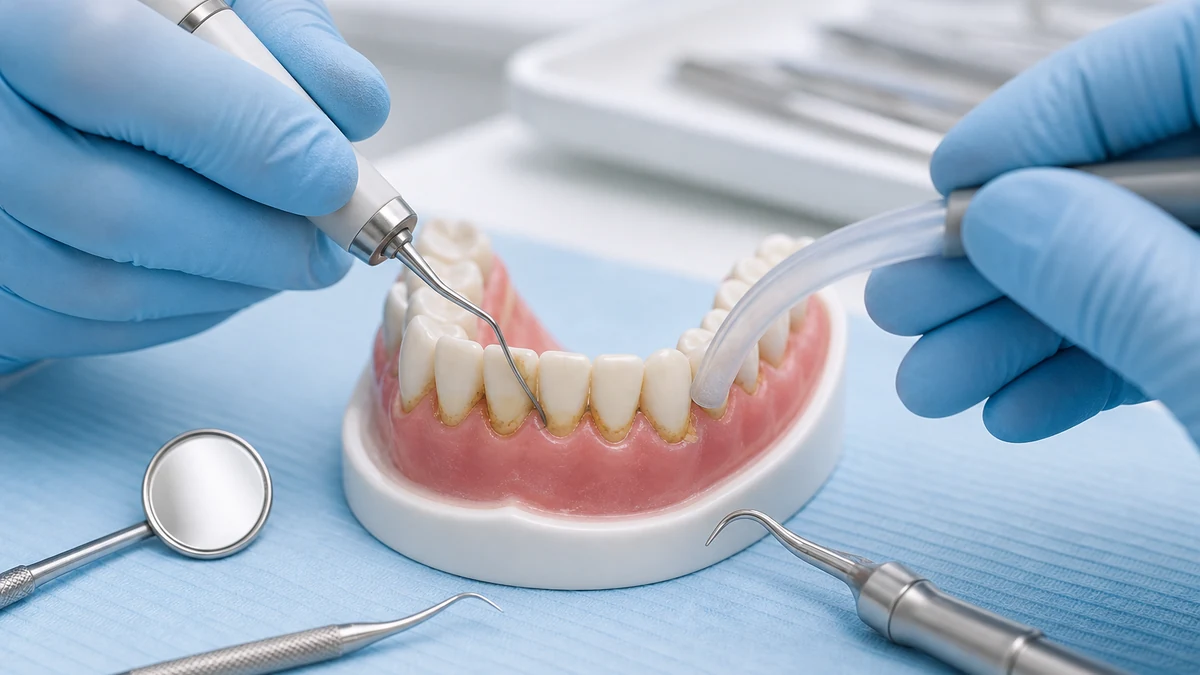
Deep cleaning, known clinically as scaling and root planing, is a non-surgical gum treatment that removes plaque and hardened tartar from below the gumline. It is the standard first-line treatment for gum disease (periodontitis) and goes deeper than a routine dental clean. While a regular scale-and-polish addresses the visible surfaces of your teeth, deep cleaning targets the bacteria trapped inside the pockets that form between the gum and the root. Patients researching gum care in Turkey and Istanbul often come across the term, so this guide explains what the procedure is, who needs it, and what recovery actually looks like.
What is the difference between a deep cleaning and a regular cleaning?
A regular cleaning polishes the crowns of your teeth above the gumline and is preventive. A deep cleaning reaches beneath the gum to clean the root surfaces and remove infection from periodontal pockets. It is a treatment for active gum disease, not a routine hygiene appointment, and usually takes longer.
The distinction matters because the two procedures treat different problems. Regular cleanings keep healthy gums healthy. Scaling and root planing is reserved for gums that have already pulled away from the teeth, allowing bacteria and tartar to accumulate in the resulting pockets. Once those pockets deepen past a few millimetres, brushing and flossing alone cannot reach them.
How does scaling and root planing work?
The procedure has two distinct stages, usually carried out under local anaesthetic so the area is numb and comfortable:
- Scaling. The dentist or hygienist removes plaque and tartar from the tooth surfaces and from inside the gum pockets, using fine hand instruments and an ultrasonic scaler that breaks up deposits with vibration and water.
- Root planing. The exposed root surfaces are smoothed so that bacteria find it harder to re-attach and so the gum can heal snugly back against the tooth.
Because gum disease often affects the whole mouth, treatment is commonly split into two or more visits, frequently working one half or one quarter of the mouth at a time. This keeps each appointment manageable and the numbing localised.
Who needs a deep cleaning?
You may need scaling and root planing if your dentist finds deepened gum pockets, bleeding gums, persistent bad breath, or early bone loss on an X-ray. It is recommended when gum disease has progressed beyond gingivitis but before surgery becomes necessary. A periodontal examination, where pocket depths are measured, confirms whether it is needed.
Common signs that point towards a need for deeper treatment include:
- Gums that bleed when you brush or floss
- Red, swollen, or tender gum tissue
- Gums that have started to recede, making teeth look longer
- Persistent bad breath or a bad taste
- Teeth that feel slightly loose or have shifted
If you notice any of these, it is worth booking an assessment. Untreated gum disease is a leading cause of tooth loss in adults, and catching it early gives the best chance of saving the affected teeth. Treating recession at an early stage can also help you avoid more involved procedures such as gum graft surgery for receding gums later on.
Does a deep cleaning hurt?
Most people feel pressure rather than pain during treatment because the area is numbed with local anaesthetic. Some tenderness, mild soreness, and temporary sensitivity to hot or cold are normal for a few days afterwards. Over-the-counter pain relief and a soft diet usually keep any discomfort manageable.
Deep cleaning is a treatment, not a quick polish. Allowing time for your gums to settle in the days afterwards is part of getting the full benefit.
What to expect during recovery
The first 24 to 48 hours after scaling and root planing are when your gums are most sensitive. You can support healing by keeping the area clean while being gentle with it. Typical guidance includes:
- Rinse with warm salt water to soothe the gums and reduce bacteria
- Eat softer foods and avoid very hot, spicy, or crunchy items at first
- Brush gently around the treated areas and resume normal flossing once your dentist advises
- Avoid smoking, which slows gum healing significantly
Mild gum recession can appear after treatment as inflammation subsides and the swollen tissue tightens. This is the gum returning to a healthier position rather than a complication. If you experience worsening pain, swelling, or bleeding several days later, contact your dentist. Ongoing soreness alongside other symptoms can sometimes signal a separate issue, such as those described in our guide to bleeding gums and what they mean.
Why ongoing gum care matters after deep cleaning
Scaling and root planing treats existing gum disease, but it does not make you immune to it. Without good daily care, plaque can build up again and pockets can re-form. Most dentists recommend more frequent maintenance cleanings, often every three to four months, for a period after deep cleaning to keep the gums stable.
Good home care is the other half of the equation: brushing twice a day, cleaning between the teeth daily, and attending regular check-ups. Where recession has already exposed root surfaces, your dentist can advise whether further treatment, such as treatment for gum recession, would help protect those teeth in the longer term. Our specialist team can assess your gum health and tailor a maintenance plan to your needs.
How much does a deep cleaning cost?
Costs vary with the number of quadrants treated and the severity of the gum disease. As an approximate guide, scaling and root planing in the UK often falls in the region of £80 to £200 or more per quadrant. In Turkey, periodontal treatment is typically significantly more affordable for international patients, although the exact figure depends on your individual case.
These ranges are approximate and vary by case, so a personal assessment is the only way to get an accurate quote. The priority should always be treating the gum disease properly, since the cost of doing nothing, in the form of tooth loss and more complex future treatment, is far higher.
Related reading

Mehmet Kaplan
Dr. Mehmet Kaplan graduated from Istanbul University Faculty of Dentistry. Applying modern dental techniques and up-to-date treatment methods, Dr. Kaplan personalizes his treatments according to the individual needs of h…
View full profile →