
 English
  Turkce
  Deutsch
  Francais
  Russkij
  العربية
  Espanol
  Italiano
  Nederlands
  Balgarski
  Romana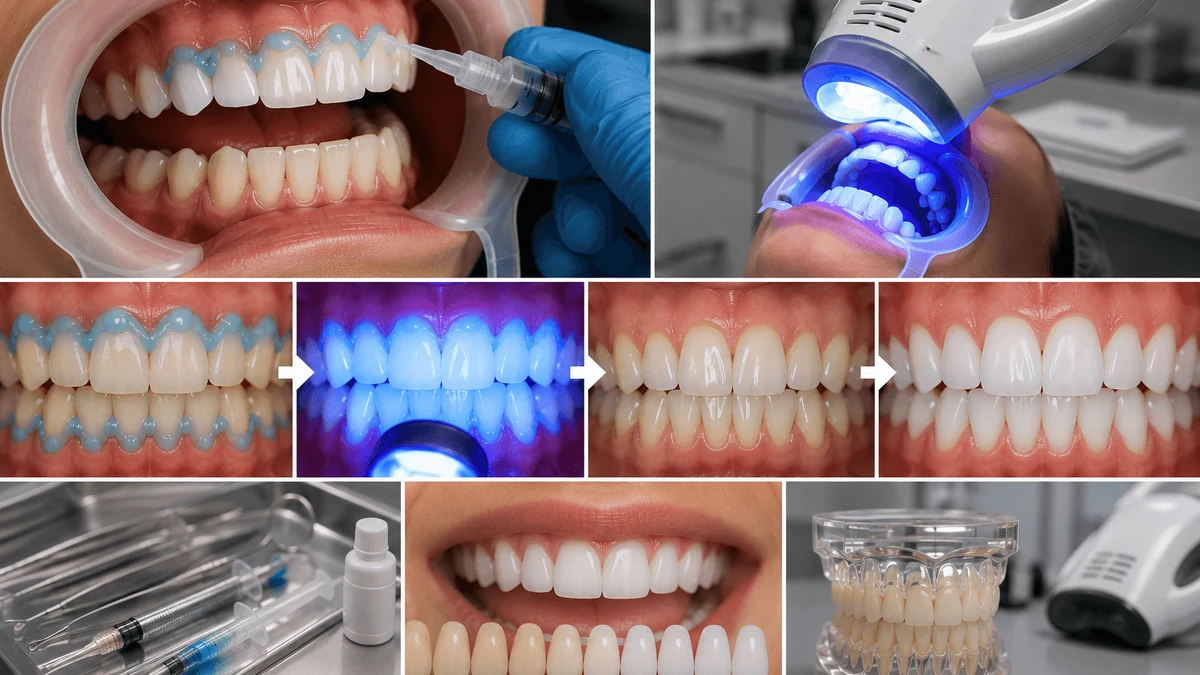
Laser teeth whitening in Turkey is a professional, in-clinic cosmetic treatment that uses a concentrated bleaching gel, activated by a light or laser, to lighten the colour of natural teeth in a single visit. Often called light-activated or in-office whitening, it is one of the fastest ways to brighten a smile, which is why many international patients visiting Istanbul ask about it alongside veneers and bonding. This guide explains what laser whitening is, who suits it, how the procedure works step by step, the realistic results and limits, the honest risks, and the approximate costs you can expect.
What is laser teeth whitening?
Laser teeth whitening is a form of professional bleaching carried out by a dentist. A high-concentration peroxide gel is applied to the front surfaces of the teeth, and a light or laser is then directed at the gel to help speed up the whitening reaction. The active ingredient breaks down stain molecules within the enamel and dentine, lifting the overall shade of the tooth.
The term laser is used loosely in dentistry. Many systems marketed as laser whitening actually use a bright LED or halogen lamp rather than a true surgical laser, and current evidence suggests the light itself adds only a modest boost over the gel alone. The real work is done by the peroxide; what you are paying for is a strong, professionally applied agent and the supervision that makes higher concentrations safe. It sits within the wider family of options covered in our overview of teeth whitening in Turkey.
Who is a good candidate for laser whitening?
Laser whitening suits people with healthy teeth and gums whose discolouration comes from surface and age-related staining, such as that caused by coffee, tea, red wine, or tobacco. It works best on natural teeth with yellow or brown tones, and it is ideal for patients who want a noticeable lift quickly, for example before a wedding or while on a short trip.
You may not be an ideal candidate if you have untreated decay, gum disease, or exposed roots, as bleaching these can cause pain. Whitening does not change the colour of fillings, crowns, veneers, or bridges, so a smile with visible restorations may end up mismatched. Grey or banded staining (for instance from certain antibiotics) responds poorly to external bleaching. Whitening is also not recommended during pregnancy or breastfeeding, and a specialist assessment confirms whether it suits your case.
- Surface staining from food, drink, or smoking
- General yellowing with age on otherwise healthy teeth
- A wish for a fast, noticeable brightening before an event
- No major dental work or untreated decay needing attention first
Laser whitening versus at-home kits
In-clinic laser whitening uses a far stronger gel than any kit you can buy, applied under professional protection for your gums, so results appear in one visit. Home and over-the-counter products use lower concentrations and take weeks of daily use to show a milder change. Many clinics combine the two, giving an in-office session followed by custom trays to maintain the result. We compare the approaches in detail in our guide to professional versus at-home teeth whitening.
How does the laser whitening procedure work?
One of the main attractions of laser whitening is speed. A full session usually takes around 60 to 90 minutes and is completed in a single appointment, which fits neatly into a short trip to Turkey. The process is careful even though it is quick, and protecting the soft tissues is a key part of it.
- Assessment and shade record. The dentist checks your teeth and gums, rules out decay or sensitivity issues, and records your starting shade so progress can be measured.
- Cleaning and protection. The teeth are cleaned, then a protective barrier or rubber dam is placed over the gums and lips so only the enamel is exposed to the gel.
- Gel application and light activation. The peroxide gel is applied to the front teeth and the light or laser is directed at it, usually in two to four short cycles of several minutes each, with fresh gel between rounds.
- Rinse and review. The gel is removed, the new shade is checked against the starting record, and the dentist gives aftercare advice to protect and maintain the result.
Some patients are sent home with custom trays and a milder gel to top up the colour over the following days, which can deepen and stabilise the final result.
What are the benefits of laser teeth whitening?
The biggest advantages are speed, the strength of the result, and the safety of having a high-concentration agent applied under supervision. Because a dentist controls the process, the gums are protected and the shade change is monitored throughout.
- Fast: a visible change in a single one-to-two-hour visit.
- Stronger result: higher gel concentration than any home kit can lift more in less time.
- Supervised: gums and lips are protected, reducing the risk of chemical irritation.
- Tailored: the dentist can adjust intensity for sensitive teeth and advise on upkeep.
Whitening only lightens natural enamel, so any planned veneers, crowns, or bonding should be matched to the new shade after whitening, never before.
What are the risks and considerations?
Honest planning means weighing the trade-offs, not just the highlights. The most common side effect is temporary tooth sensitivity to cold, along with possible short-lived gum irritation if any gel touches the soft tissue. These effects typically settle within a day or two, and your dentist can recommend a desensitising toothpaste to ease them. Patients prone to sensitivity should read our guide to teeth whitening for sensitive teeth before booking.
Results are not permanent. Whitening gradually fades over months to a couple of years as teeth pick up new stains, so realistic expectations matter and no fixed, lifelong shade can be guaranteed. Over-whitening, or repeating treatments too often, can leave teeth looking unnaturally opaque and may increase sensitivity, which is why professional supervision and sensible spacing of sessions are important. Whitening also cannot lighten restorations or correct grey, banded, or deep internal staining, and any active decay or gum problems should be treated first.
How much does laser teeth whitening cost in Turkey?
Prices depend on the system used, the number of light cycles, whether take-home trays are included, and the clinic, so treat any figure as approximate and confirm your own quote at consultation. As a general guide, laser teeth whitening in Turkey is widely considered significantly more affordable than equivalent treatment in the UK, the US, or much of Western Europe, without that lower price implying lower-quality dentistry elsewhere.
| Location | Approx. cost (in-clinic laser whitening) |
|---|---|
| Turkey | £100–£250 |
| United Kingdom | £300–£700 |
| United States | £400–£900 |
These ranges are approximate and vary by case; the choice of system, the number of cycles, and any maintenance trays all affect the total. Many patients pair whitening with other cosmetic work, in which case your dentist will advise on the right order so the final shades match.
Why consider Turkey and Seren Klinik?
Turkey has become a leading destination for cosmetic dentistry thanks to experienced specialists, modern clinics, and strong treatment-and-travel value. At Seren Klinik, our specialist team assesses each case individually, checks that your teeth are suitable before whitening, and favours a natural, balanced result over an artificially bright white. For many patients, professional whitening is recommended as a conservative first step before considering more involved cosmetic treatment.
As with any cosmetic treatment, the most important step is an honest assessment of whether laser whitening is right for you, and what realistic result to expect. A reputable clinic will tell you when whitening alone will achieve your goal, and when bonding, veneers, or treatment of an underlying problem would genuinely serve you better.
Frequently asked questions
How long does laser teeth whitening last?
Results typically last from several months up to around two to three years, depending on your diet and habits. Coffee, tea, red wine, and smoking shorten it, while take-home trays and good hygiene help maintain the shade, so longevity varies by case and is never permanent.
Is laser teeth whitening safe?
Professional laser whitening is generally considered safe when a dentist protects your gums and screens for decay first. The most common side effect is temporary sensitivity that usually settles within a day or two. It is not advised during pregnancy or on untreated decay.
Does laser whitening work on crowns and veneers?
No. Whitening gel only lightens natural enamel, so it does not change the colour of crowns, veneers, fillings, or bridges. If you have visible restorations, whitening first can leave them looking mismatched, so any planned cosmetic work should be colour-matched to your teeth after whitening, not before.
How white will my teeth get?
Most people see a noticeable lift of several shades in one session, though the exact result depends on your starting colour and the type of staining. Surface and age-related yellowing responds well, while grey, banded, or deep internal staining lightens little, so a dentist can give you a realistic estimate beforehand.
Related reading

Berkan Tik
Dentist Berkan Tik graduated from Istanbul University Faculty of Dentistry. He has worked in various clinics focusing on implantology, prosthetic dental treatments, aesthetic dentistry, and digital dentistry applications…
View full profile →